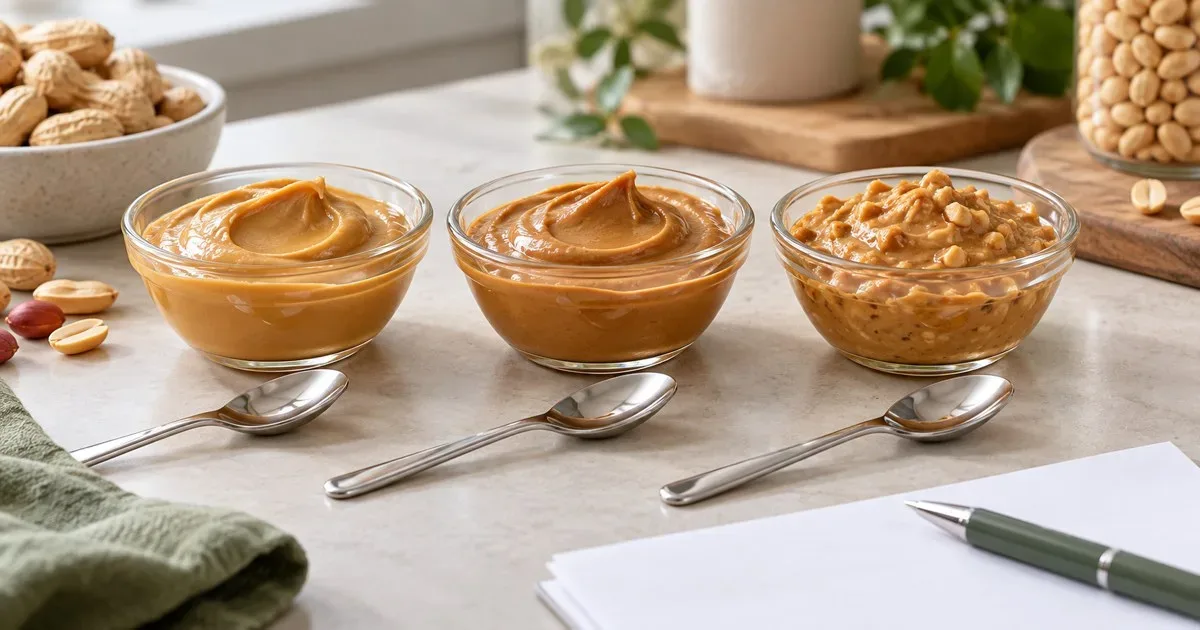
A promising quotation is only a starting point. Peanut butter sample testing helps importers, distributors and food-service buyers decide whether a formulation fits their customers and operations before committing to a bulk order. A useful review goes beyond asking whether a spoonful tastes good: it connects the sample, its paperwork and its performance in your intended application.
This checklist is a practical purchasing framework. Use it alongside your quality team's assessment and the product-specific documentation; a tasting exercise does not replace laboratory testing or supplier approval.
Define the buying brief before requesting samples
Start with the job the peanut butter needs to do. A retail spread, a bakery filling and a sauce ingredient can have different texture and handling expectations. Write a short brief so that each supplier responds to the same requirement.
- Application: retail jars, bakery production, food service or another defined use.
- Formulation: smooth or crunchy, preferred ingredient profile and any restrictions.
- Market: destination country and the people responsible for reviewing local requirements.
- Commercial context: target pack, initial quantity and expected repeat volume.
- Decision criteria: the characteristics that must be acceptable before an order can proceed.
Keep preferences separate from essential requirements. A darker roast colour may be a preference; an incompatible ingredient is a different kind of decision. Making that distinction early prevents an attractive sample from being approved against an incomplete brief.
Identify the sample and its supporting documents
Give each sample a reference when it arrives. Record the supplier, product name, batch or sample code, date received and condition of the container. Photograph the label and keep the original information with your assessment.
Ask which formulation the sample represents
Confirm whether it is a standard production product, a development trial or a proposed custom formulation. Ask whether the commercial order will use the same specification. If the recipe changes after evaluation, decide which checks must be repeated.
Request documents that match the product
Ask for a current ingredient declaration, allergen information, product specification and storage instructions. Where a Certificate of Analysis is supplied, check the product identity, batch reference and scope of the reported results with your quality team. A generic brochure is useful background, but it is not the same as batch-specific evidence.
Agree the technical and destination-market checks with appropriately qualified reviewers. Do not treat a good flavour score as confirmation that those separate requirements have been satisfied.
Run peanut butter sample testing under comparable conditions
A simple, consistent setup is more useful than a complicated score sheet used differently for each supplier. Follow the handling instructions for each sample, record the evaluation conditions and keep the serving method consistent where a fair comparison is possible.
Use clear sample codes
Code samples A, B and C rather than displaying prices or supplier names during an initial comparison. Keep a separate reference list. This is a practical way to focus the first discussion on the product; commercial terms can be reviewed afterwards.
Describe what you observe
Record appearance, aroma, flavour and texture separately. Use concrete descriptions such as “roast flavour stronger than reference” or “spreads less easily in our trial” instead of only writing “good” or “bad.” USDA Agricultural Research Service research on peanut butter consumer language likewise considered appearance, flavour and texture as distinct attributes.
Record handling before comparing
Note the product temperature and whether stirring was required under the supplied instructions. If a sample has a visible oil layer, document it and ask how that behaviour relates to the formulation and agreed specification. Avoid comparing one sample immediately after a different handling process without recording the difference.
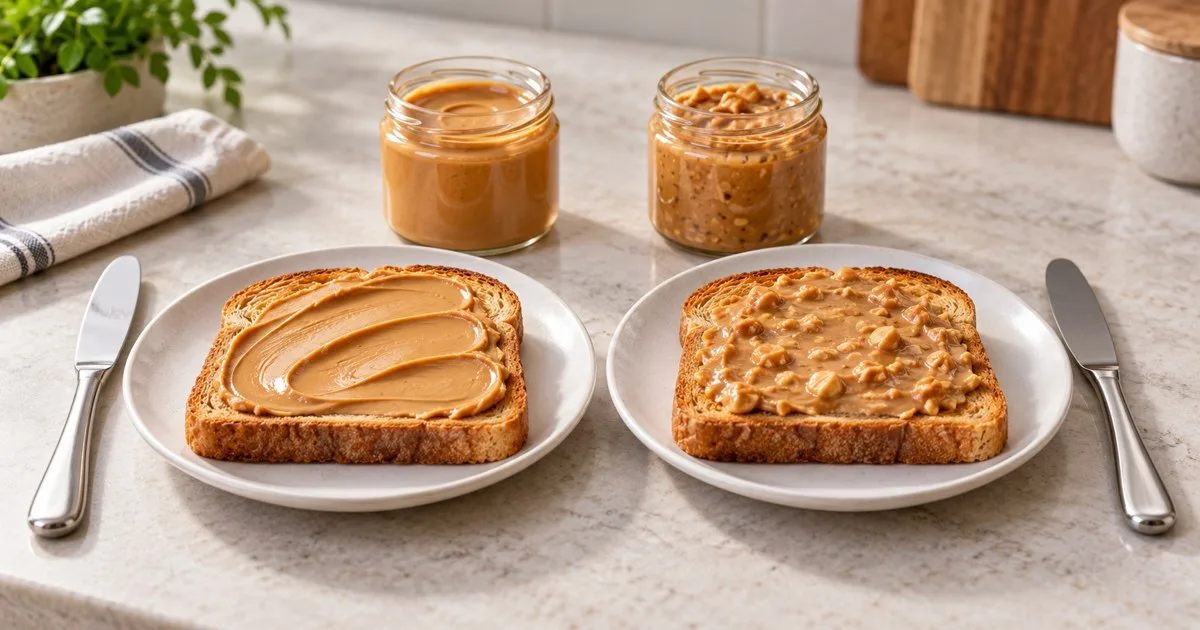
Test it in your actual product or workflow
A spoon test is useful, but your purchasing decision should also reflect the intended use. Choose a repeatable small trial that resembles the way your business will handle the peanut butter.
- Retail: assess the experience of opening, stirring if required and spreading under the stated usage conditions.
- Bakery: use the sample in your own filling or recipe, keeping the other ingredients and process settings consistent.
- Food service: check portioning, mixing and dispensing with the equipment you expect staff to use.
- Manufacturing: involve the production and quality teams in assessing the ingredient against the agreed process needs.
Write down the recipe, quantities, equipment and conditions used. For example, if two samples behave differently in a filling, the next reviewer should be able to reproduce the same comparison. Changes in the rest of the recipe can make results harder to interpret.
Use a short evaluation sheet
The following is a suggested buyer worksheet, not a validated laboratory method. Set your acceptance criteria before the review and adapt the rows to your business.
| Check | What to record | Next step if unclear |
|---|---|---|
| Identity | Product, sample code and formulation version | Ask supplier to confirm the reference |
| Appearance and aroma | Observations against your agreed reference | Request explanation or further review |
| Flavour and texture | Specific descriptions from each reviewer | Discuss whether reformulation is needed |
| Application performance | Recipe, handling conditions and result | Repeat a controlled trial if necessary |
| Technical documents | Documents received and review status | Keep technical approval pending |
| Commercial match | Pack, quantity and quoted specification | Resolve differences before purchase |
You can mark each line “acceptable,” “clarification needed” or “not suitable.” Preserve the observations behind the decision. A single average score can hide an essential requirement that still needs attention.
Turn an accepted sample into a clear order specification
Before confirming an order, link the accepted sample reference to the product specification and commercial quotation. Record any agreed changes and the person responsible for approval. Confirm how the supplied production batch will be identified and which documents will accompany it.
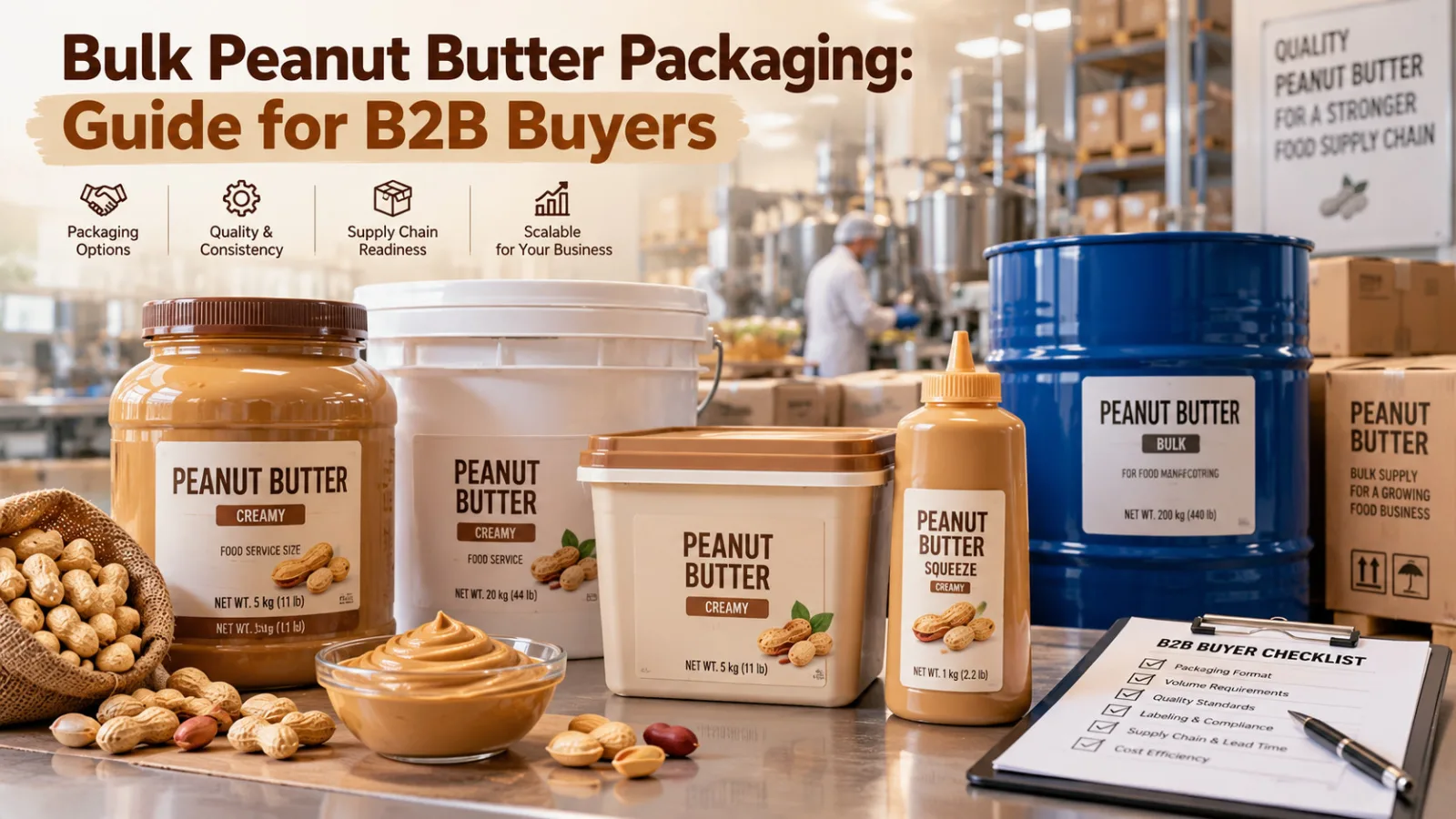
Also review the practical details: pack format, quantity, dispatch arrangements and how discrepancies will be reported. Our bulk peanut butter packaging guide explains the packaging questions to include. Keep sampling, technical approval and commercial approval visible as separate steps in your purchasing record.
If the sample is promising but does not yet meet the brief, send structured feedback. “We need a less pronounced roast flavour for this filling application” gives a supplier a clearer development direction than “please improve the taste.” Ask for a revised sample when a meaningful formulation change is proposed.
Make the first bulk order easier to evaluate
A useful sample review ends with a documented decision, not just an empty jar. Keep the brief, sample references, evaluation notes and approved specification together so that procurement, production and quality teams can work from the same information.
United Foods' Smooth Peanut Butter – Classic listing includes a sample-request option. Share your intended application, destination, preferred texture and order estimate through the United Foods inquiry page, and ask the team to confirm the appropriate sample and current documentation.
Reference: USDA ARS: Using Focus Groups to Develop a Quantitative Consumer Questionnaire. The purchasing worksheet and workflow above are editorial suggestions, not a certified test protocol.