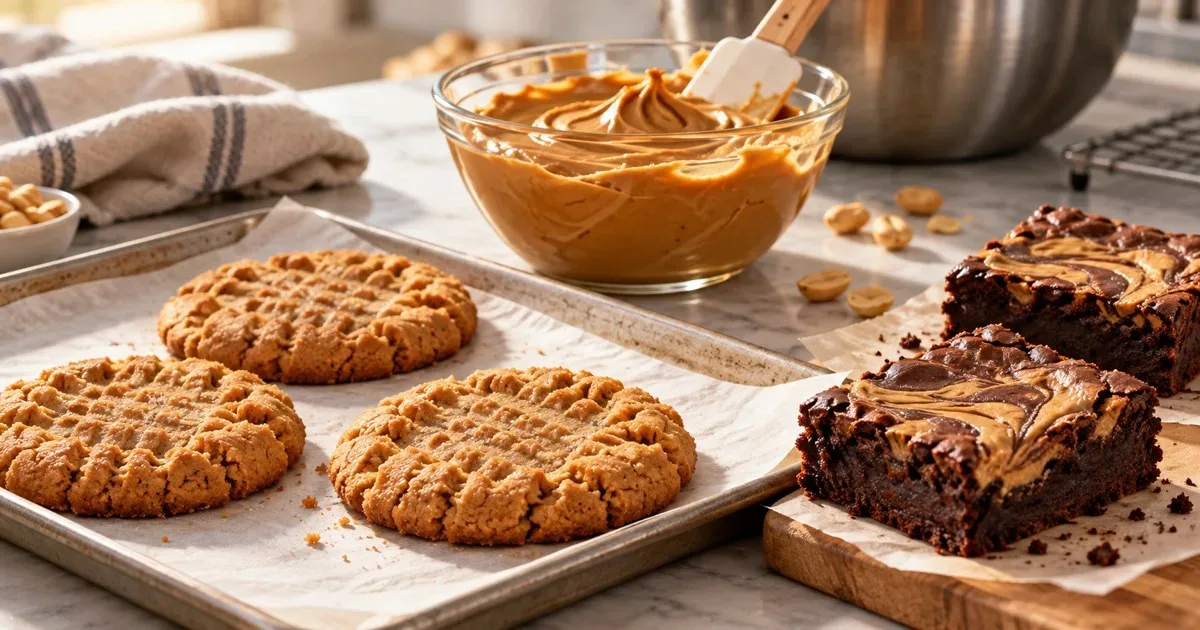
Choosing peanut butter for baking starts with the product you want to make, not just the lowest price on a supplier list. A cookie dough, a brownie swirl and a sandwich-cookie filling put the ingredient to work in different ways. For a bakery buying in bulk, the useful question is whether a particular formulation performs consistently in your own recipe and process.
This guide helps bakery owners, purchasing teams and food-service operators turn that question into a practical buying brief. It covers texture, controlled recipe trials, pack selection and repeat-order planning without assuming that one peanut butter works in every bake.
Define the bakery application first
Write down where the peanut butter will be used. “For bakery production” is a broad description; a supplier can respond more usefully when you name the finished product and how the ingredient enters the process.
- Mixed into dough or batter: describe the recipe and the texture expected in the finished bake.
- Swirled or deposited: explain how the peanut butter is portioned and the appearance you want after baking.
- Used in a filling: identify the mixing, spreading or depositing method and the stage at which the filling is added.
- Used as a topping: specify the desired texture, portion and serving format.
Also tell the supplier whether you are developing a new product or replacing an ingredient in an established recipe. A replacement should be evaluated against your existing reference; a new recipe needs its own development brief.
Match peanut butter for baking to the recipe
“Smooth,” “crunchy” and “natural” describe useful starting points, but they do not provide the full formulation. Ask for current ingredient and product specifications rather than deciding from the front-of-pack description alone.
Smooth or crunchy: decide what the pieces should do
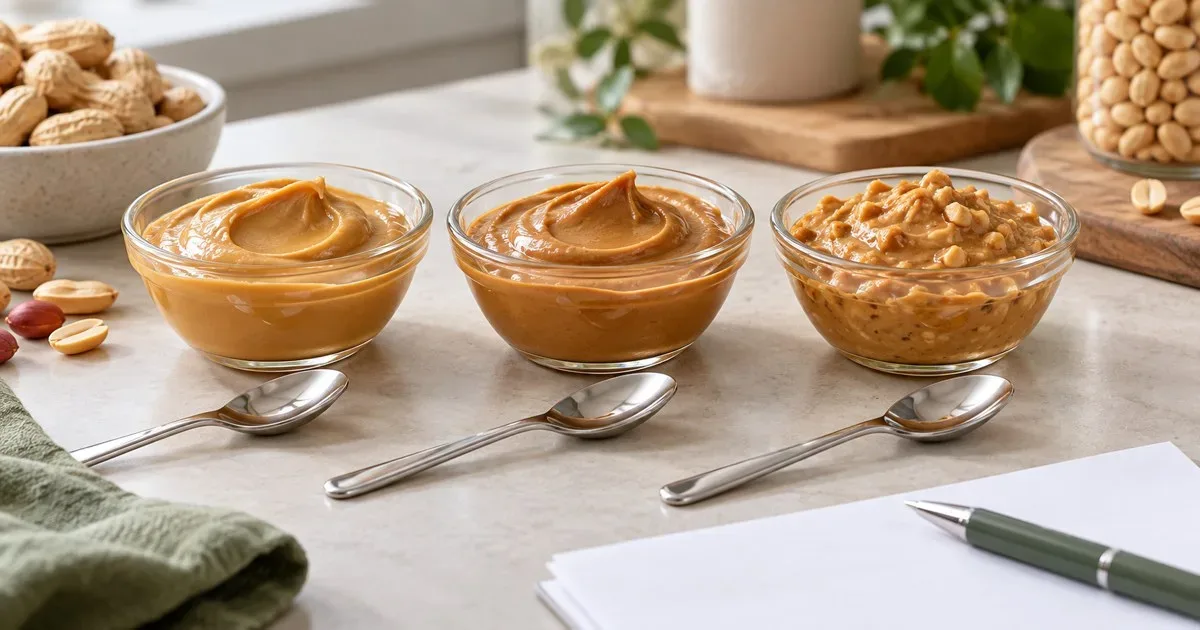
For a smooth filling or an even batter, start the discussion with a smooth formulation. If visible peanut pieces are part of the finished product, evaluate a crunchy option in the actual recipe. Check how those pieces work with your portioning tools, spreading method and intended bite.
For a broader texture comparison, see our smooth versus crunchy peanut butter guide. The final choice still needs a bakery trial: a spoonful from the jar cannot show every aspect of production performance.
Do not assume natural and standard formulations are interchangeable
Recipe guidance can differ. King Arthur Baking's peanut butter cake recipe specifies that all-natural peanut butter will not give the described result, while its peanut butter brownie recipe permits natural peanut butter when thoroughly mixed. The useful lesson is to follow the specific recipe's assumptions and test substitutions rather than applying a universal rule.
Ask how the proposed ingredient should be handled before weighing and mixing. If the supplier advises stirring, include that step in the trial record. Do not change the peanut butter, mixing method and other ingredients at the same time and then attribute every difference to the peanut butter.
Review the full ingredient profile
Ask about the complete ingredient list, not just texture. Your product-development team should assess how a proposed formulation fits the recipe and the information required for your finished product. Keep ingredient and allergen information available to the people responsible for purchasing, production and labeling.
Run a small, repeatable recipe trial
Before a bulk purchase, choose a representative recipe and document a small production trial. This is a suggested internal workflow, not a validated test protocol or a substitute for your technical approval process.
Keep a reference batch
Where possible, make your usual recipe with the current ingredient as a reference. Use the same ingredient weights, equipment, batch size and process settings when testing alternatives. Record any deliberate change so the comparison remains understandable.
Measure the things that matter to the product
Select observations before the trial. For a cookie, your team might record portion weight, spread, appearance and texture after cooling. For a filling, it might record ease of mixing, portioning consistency and the finished eating experience. Choose checks that relate to your product rather than copying a long checklist that nobody will use.
Review the finished item at the intended stage
Assess the product when it will normally be packed, displayed or served. A bakery's technical team should determine the required shelf-life and safety evaluation for the finished recipe. Do not infer either from a short tasting trial or from the unopened ingredient's shelf-life statement.
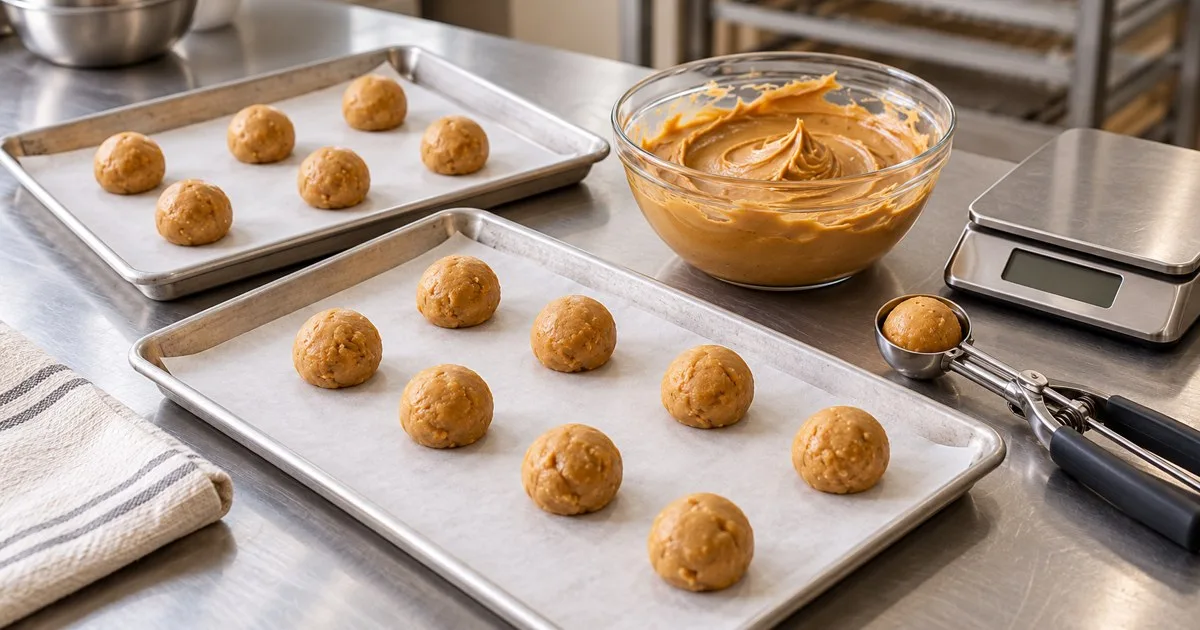
Use a simple bakery trial record
A short record makes it easier to repeat a successful trial and explain a failed one. The example below is a suggested worksheet; adapt it to your operation.
| Record | What to capture | Why it helps |
|---|---|---|
| Ingredient identity | Supplier, formulation, sample or batch reference | Connects results to the exact ingredient tested |
| Recipe version | Ingredient weights and any approved changes | Keeps recipe differences visible |
| Process | Mixing, portioning and baking settings used | Helps the next operator repeat the trial |
| Output | Finished count, accepted pieces and observations | Supports yield and consistency review |
| Decision | Accept, revise or request clarification | Shows what must happen before purchase |
Retain the supplier's response when you request a change. If a revised formulation is supplied, give it a new reference and repeat the relevant checks. Our peanut butter sample-testing checklist provides a wider framework for handling sample identity and supporting documents.
Choose a bulk pack that fits the workbench
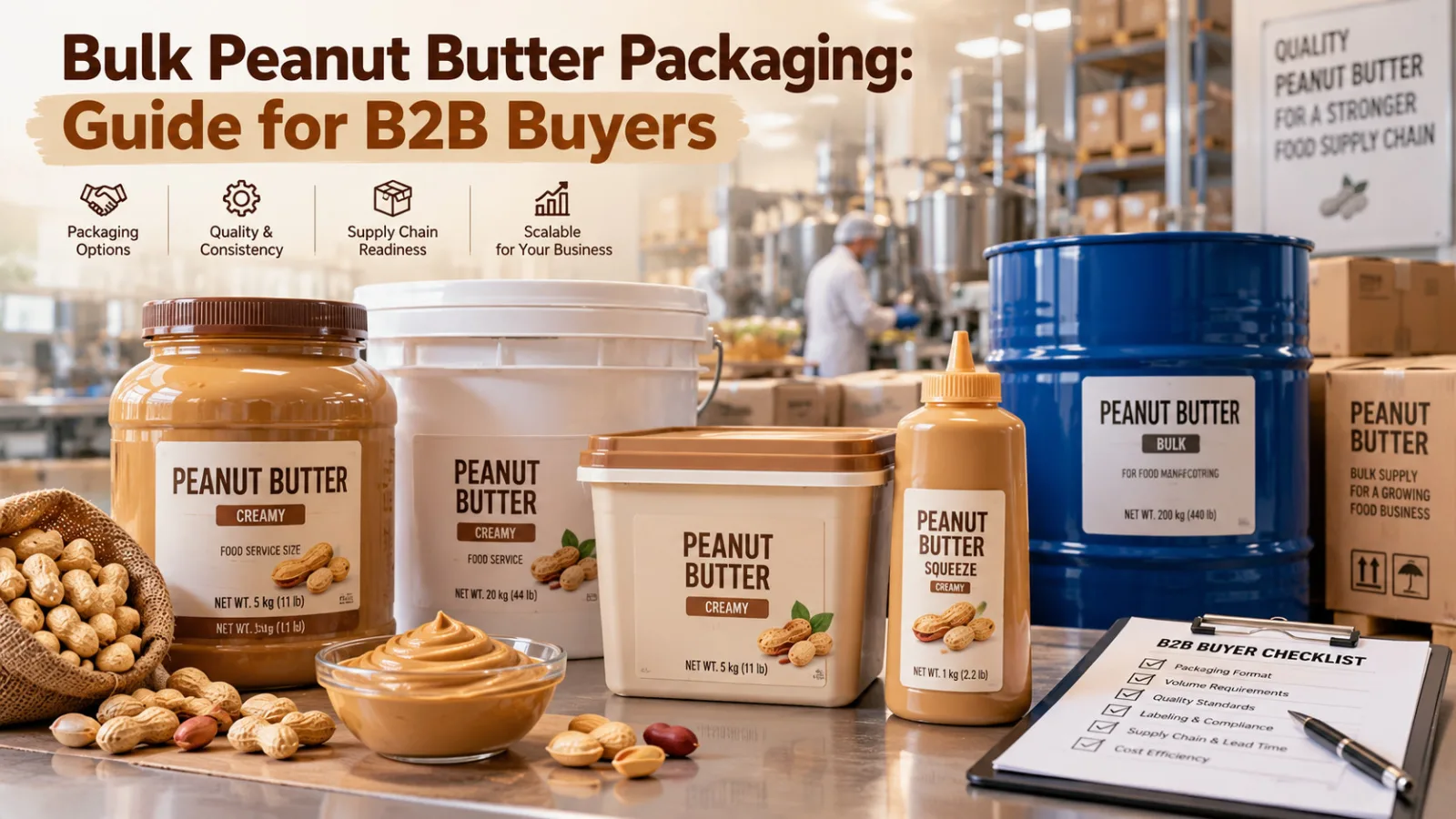
A larger pack is useful only when your team can handle and use it appropriately. Compare daily consumption, container access, dispensing tools and available storage space before choosing between retail jars and larger containers.
United Foods' Smooth Peanut Butter – Classic listing includes several pack formats. Confirm current availability for the chosen formulation and quantity rather than assuming that every recipe is offered in every container. The bulk packaging guide covers the questions to ask about the container and outer packing.
Follow the ingredient's supplied storage and after-opening instructions. Keep its identity and opening date available in your own stock records, and plan access with your bakery's handling procedures in mind.
Compare cost against usable production
After the formulation has passed the relevant review, compare commercial offers using the same pack, quantity and delivery basis. Then consider the ingredient quantity needed for your approved recipe and the accepted output from your trial.
A simple planning calculation is:
Peanut butter ingredient cost per accepted piece = peanut butter cost used in the batch ÷ accepted pieces produced.
For example, if a hypothetical batch uses 2 kg at an assumed ₹200 per kg and produces 100 accepted pieces, its peanut butter ingredient cost is ₹4 per piece. These are invented figures for explanation, not United Foods prices. They exclude every other ingredient, packaging, labour, energy and delivery cost.
This calculation helps compare the peanut butter component of a recipe. It does not prove overall profitability or compensate for a formulation that fails your product requirements. For comparing supplier offers, use our guide to comparing bulk peanut butter quotes.
Plan the reorder before scaling up
Once a trial is accepted, link the recipe version to the approved product specification and sample reference. Confirm the order quantity, pack format, delivery details and supplier lead time in writing. Ask what information will identify the production batch when it arrives.
Give production and purchasing the same approved reference. If the bakery changes its recipe or the supplier proposes a formulation change, decide which checks need repeating. A documented approval makes it easier to separate a new development decision from a routine reorder.
Send United Foods a bakery-specific inquiry
Start with the Smooth Peanut Butter – Classic product page, which includes an inquiry and sample-request option. Share the finished product, mixing or depositing method, texture preference, estimated monthly requirement and delivery destination. Ask the team to confirm a suitable sample and current specification.
When the brief describes your actual bakery process, the next conversation can focus on the right formulation and trial. Contact United Foods with that brief before committing to a bulk order.
Recipe references: King Arthur Baking's Peanut Butter Cake and Peanut Butter Brownies. These illustrate why formulation advice depends on the recipe; no recipe is reproduced here.