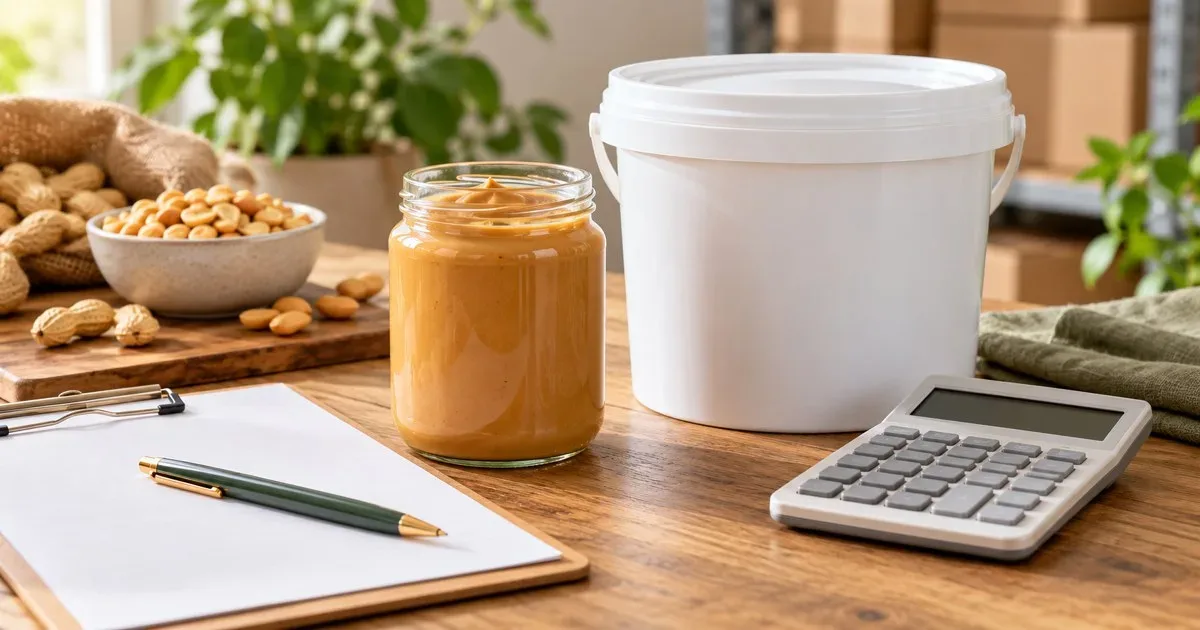
Two suppliers send different prices for what looks like the same product. Which offer is better? To compare peanut butter quotes, first check that the formulation, net quantity, packaging and delivery basis match. A lower price per jar can mean something quite different from a lower price per kilogram delivered to your warehouse.
This guide gives importers, distributors, private-label brands and food-service buyers a practical comparison method. It uses a hypothetical calculation to show how the numbers work; the example is not a United Foods price list or a supplier quotation.
Start with one purchasing brief
A useful comparison begins before quotations arrive. Send each supplier the same brief so that their offers answer the same question. Otherwise, you may spend more time clarifying differences than assessing the products.
- Product: smooth, crunchy or another defined peanut butter formulation.
- Recipe requirements: ingredient preferences and any essential restrictions.
- Pack: net weight, container type, closure and branding needs.
- Quantity: first-order volume and any repeat-order estimate, clearly distinguished.
- Destination: delivery city, country or the specific receiving point for the quote.
- Timing: target order date and required delivery window.
- Supporting information: product specification, sample reference and documents your reviewers need.
For example, asking for “500 kg of smooth peanut butter in 500 g retail jars, with a quotation for delivery to our named warehouse” is clearer than asking for the best peanut butter price. Add the recipe and labeling requirements relevant to your business before sending the brief.
How to compare peanut butter quotes on the same basis
Keep an original copy of each offer, then enter its details in a comparison sheet. Do not replace a missing value with zero: mark it “not confirmed” and ask for clarification.
Match the formulation first
Check that each quote refers to the intended recipe and texture. A standard smooth product and a custom formulation are separate purchasing options until your team confirms they meet the same brief. Record the specification version or approved sample reference beside the price.
If you have not yet evaluated the product, use our peanut butter sample-testing checklist to structure that step. Keep product approval and price comparison visible as separate decisions.
Use net product weight
For a price quoted per jar, divide the jar price by its net product weight in kilograms. A 500 g jar contains 0.5 kg for this calculation. Keep the weight of the container, outer carton and pallet out of the net product quantity.
Product price per kg = price per pack ÷ net product weight per pack in kg.
This makes different pack sizes easier to compare numerically. It does not make their packaging equivalent: retail jars and larger pails can serve different operating needs.
Confirm what the quoted price includes
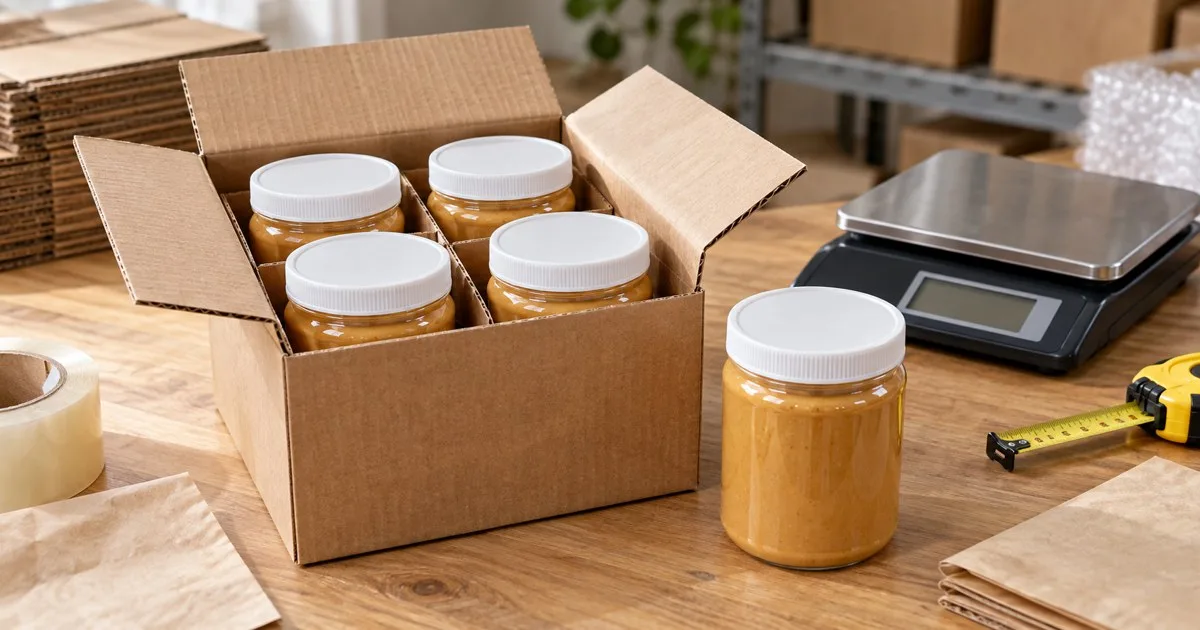
Ask whether the offer includes the container, label, outer carton and any agreed customization. Clarify the delivery point and which transport or handling charges have been included. For an export order, confirm the named trade term and place in writing with the people managing the shipment.
A bare product price should not be compared directly with a quotation that already includes additional services. Put the inclusions beside each figure so the difference remains visible.
A worked example: product price versus delivery cost
The following figures are invented for explanation. Both hypothetical offers are assumed to cover the same approved formulation, 500 g jar format and 500 kg net order quantity. Other costs are deliberately left out of this first calculation.
| Comparison item | Offer A | Offer B |
|---|---|---|
| Price per 500 g jar | ₹90 | ₹86 |
| Net product weight per jar | 0.5 kg | 0.5 kg |
| Product price per kg | ₹180 | ₹172 |
| Product cost for 500 kg | ₹90,000 | ₹86,000 |
| Assumed freight for this order | ₹5,000 | ₹12,000 |
| Product plus freight | ₹95,000 | ₹98,000 |
| Cost per kg, including only those two items | ₹190 | ₹196 |
Offer B has the lower product price, but Offer A has the lower product-plus-freight total in this example. Taxes, duties, insurance, clearance, storage and other charges are not included. Where any apply to your order, add confirmed amounts before describing a comparison as a total delivered or landed cost.
Check minimum quantities and one-time charges
The price may depend on the order you actually place. Record the quantity linked to each offer rather than assuming the same rate applies at every volume.
Separate total MOQ from per-variant requirements
Ask whether the minimum order quantity applies to the full order, each recipe, each pack size or each label design. A planned mixed order may require a different quotation from a single-product shipment.
Identify setup and artwork costs
For private-label orders, ask about any one-time artwork, printing or packaging setup charges. Confirm whether these are included in the first-order total, charged separately or subject to a particular quantity. Record how a repeat-order quote would differ rather than spreading a cost across orders that have not been committed.
Compare first orders and repeats separately
A first shipment may have different costs from a repeat order. Build one comparison for the quantity you are ready to buy and, if useful, a separate scenario for a possible repeat volume. Keep the assumptions written down.
Review the commercial details beside the price
Cost alone does not complete a buying decision. Record the practical terms that determine whether the offer fits your purchasing plan.
- Quote validity: when the price expires and when it must be reconfirmed.
- Currency: the quoted currency and, if converting, the exchange rate and date used for your internal comparison.
- Payment schedule: when each payment is due and which charges are included.
- Lead time: what event starts the production timeline and whether transit time is included.
- Product condition: agreed shelf-life expectations at dispatch or arrival, where relevant.
- Discrepancy process: how quantity, packaging or specification concerns will be documented and reviewed.
Ask for a revised written offer when an important assumption changes. A message agreeing to a different pack or destination should be reflected in the final quotation, not left disconnected from the price your team approves.
Send a clear quotation request to United Foods
United Foods' Smooth Peanut Butter – Classic page invites buyers to inquire about price, minimum quantities and export terms. Its listed packaging choices provide a starting point; confirm current availability for your required formulation and order.
You can use this short brief:
We need [formulation and texture] for [retail, food service or manufacturing]. Please quote [quantity] in [net pack size and container], with [standard or private-label packaging], for [named delivery point]. Our target order date is [date]. Please state the MOQ, included packaging, delivery basis, quote validity, payment schedule and any separate charges.
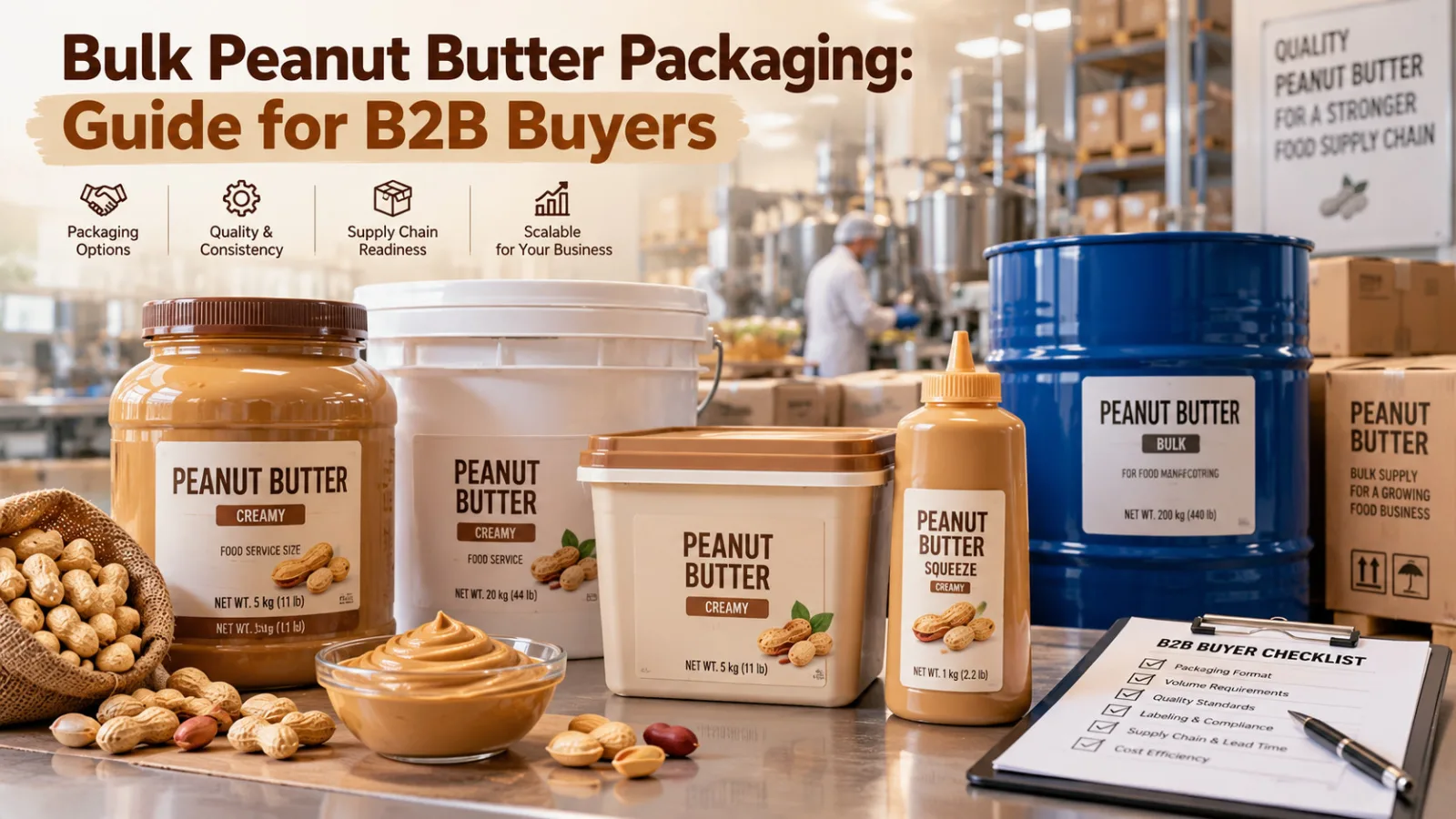
Before sending, add the product specification or sample reference if you already have one. For help defining the container, review the bulk peanut butter packaging guide. Then contact United Foods with a consistent brief so the quotation can be assessed against your actual requirement.
Make the comparison useful for the final decision
The best comparison sheet makes differences visible: what product is being supplied, how much is in each pack, which costs are included and what remains unconfirmed. Resolve those gaps before selecting an offer. A documented, comparable quote gives your team a clearer basis for its first order and its next supplier conversation.