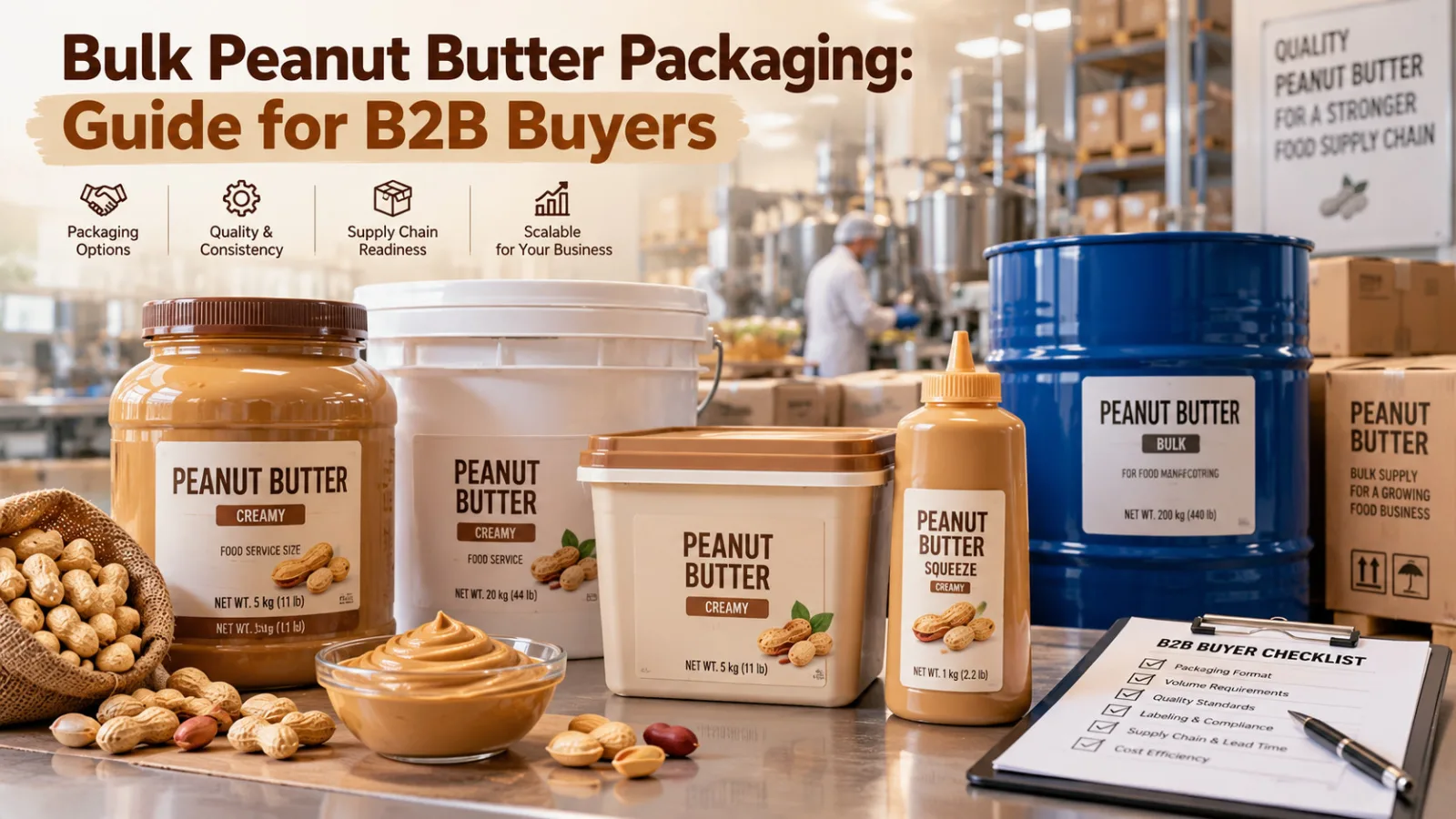
Bulk peanut butter packaging should match how the product will be sold, handled and transported. Retailers typically require consumer-ready jars, while food-service operators and industrial buyers may prefer larger pails, buckets or drums. Choosing the right format means evaluating capacity, food safety, storage, labeling and delivery requirements together.
Why Bulk Peanut Butter Packaging Matters
Packaging is more than a container for peanut butter. It protects the product during distribution, supports convenient handling and helps businesses maintain consistency between deliveries. The format selected can also affect warehouse space, filling operations, transportation arrangements and the experience of the final customer.
For business buyers, the appropriate package depends on the intended application. A supermarket distributor may need individually labeled jars, while a bakery purchasing peanut butter as an ingredient might prioritize larger containers that are easier to dispense. An exporter must additionally consider transit conditions and destination-market requirements.
When comparing packaging proposals, review the complete supply arrangement rather than focusing on container capacity alone. Important considerations include:
- Product quantity and net weight per container
- Container material and suitability for food contact
- Closure integrity and leakage protection
- Ease of opening, dispensing and resealing
- Labeling and traceability requirements
- Carton configuration, palletization and transportation
Available Peanut Butter Packaging Formats
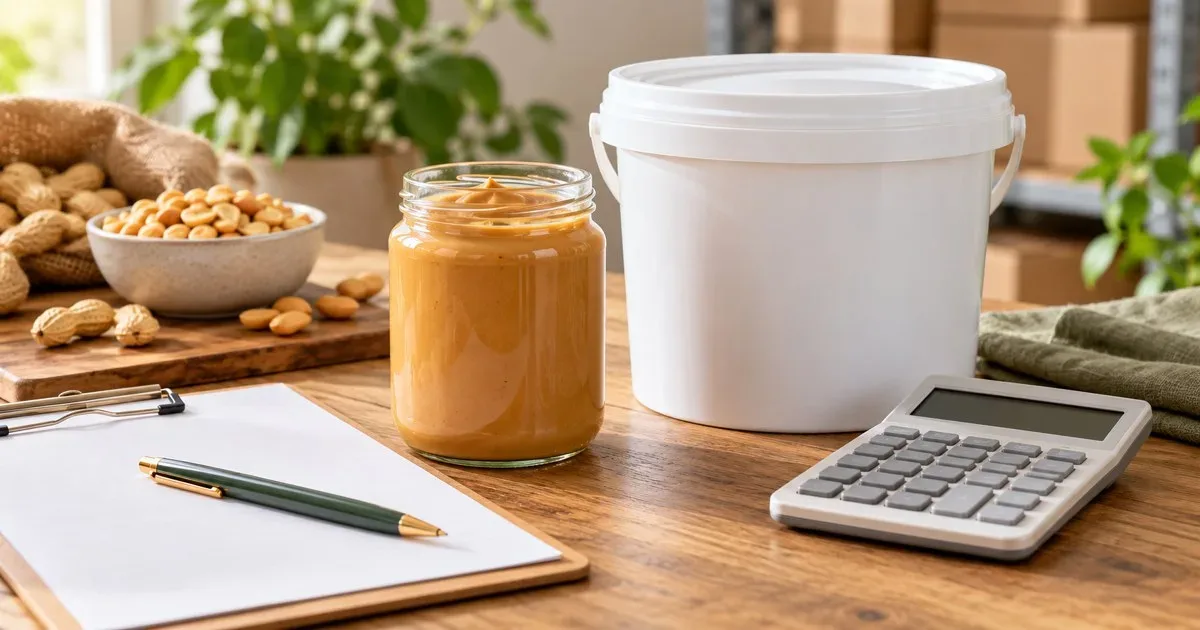
United Foods lists several packaging options for selected peanut butter products, including 200 g and 500 g jars, 1 kg pails, 5 kg and 15 kg buckets, and 200 kg bulk drums. These formats accommodate different purchasing and operating requirements. Exact availability, packaging specifications and minimum order quantities should be confirmed before placing an order.
| Pack size | Typical buyer | Primary consideration |
|---|---|---|
| 200 g jar | Retailers and specialty stores | Consumer convenience and shelf presentation |
| 500 g jar | Supermarkets and distributors | Household use and repeat retail sales |
| 1 kg pail | Cafes and smaller food-service businesses | Convenient access and manageable handling |
| 5 kg bucket | Bakeries and commercial kitchens | Frequent ingredient usage |
| 15 kg bucket | Higher-volume food-service buyers | Bulk handling and storage |
| 200 kg drum | Industrial ingredient buyers | Large-volume processing and dispensing arrangements |
These are application examples rather than fixed purchasing rules. A large retail distributor may prefer smaller jars, while a food manufacturer may need bulk containers for regular production. Buyers should confirm whether the selected recipe, packaging format and closure system are compatible.
For product-specific information, review the Smooth Peanut Butter – Classic and Natural Peanut Butter – Unsweetened listings. These pages provide a starting point for discussing available formulations and packaging options with United Foods.
Choosing Packaging for Your Business Model
Packaging decisions become easier when buyers begin with their distribution channel and actual consumption requirements. The same peanut butter formulation may require different packaging depending on whether it is intended for retail shelves, commercial kitchens or ingredient processing.
Retailers and Private-Label Brands
Retail packaging should make the product easy to recognize, store and use. Consider practical features such as container size, opening method, label readability and the space required on shelves. Private-label buyers should also confirm which branding and artwork options can be supported before approving production.
For retail distribution across different markets, labeling needs careful attention. Product names, ingredients, allergens, nutrition information, net quantity, batch identification and other required declarations must follow applicable destination-market rules. Buyers should establish responsibility for preparing and approving compliant artwork.
Food-Service Operators and Commercial Kitchens
Restaurants, cafes, bakeries and catering businesses often use peanut butter as a preparation ingredient. Larger containers may reduce the number of packs opened during routine operations, but they must remain practical for staff to handle. The appropriate size depends on usage frequency, storage conditions and how quickly an opened pack will be consumed.
For example, a bakery using peanut butter daily may find a bucket format more convenient than repeatedly opening individual jars. The buyer should still consider container weight, clean dispensing procedures and protection against contamination after opening.
Food Manufacturers and Industrial Buyers
Industrial manufacturers may use peanut butter in fillings, confectionery, bakery products, nutritional foods or other formulations. Their procurement decisions often involve more than package size because viscosity, texture and ingredient composition can influence production processes. Buyers should evaluate samples under their actual processing conditions.
Large drums may be appropriate where suitable lifting, handling and dispensing systems are available. Before selecting an industrial format, confirm the container's net weight, dimensions, closure arrangement and compatibility with the intended production equipment.
Food Safety and Packaging Quality Checks
Buyers should request sufficient technical information to assess whether their selected packaging protects the product throughout its intended distribution period. A suitable package must work with the peanut butter formulation, filling process, storage environment and transport conditions. These details should be documented rather than assumed from the container's appearance.
Container Integrity and Closure Performance
Food-contact materials should be appropriate for the product and compliant with relevant regulations. Ask how the closure is designed to prevent leakage and what checks are performed before dispatch. For export shipments, discuss whether the proposed packaging has been evaluated for expected handling and transportation conditions.
Container closures, seals and any tamper-evident features should be confirmed as part of the packaging specification. The required configuration may differ between a consumer jar and an industrial drum.
Allergen Identification and Traceability
Peanut butter contains peanuts, an important food allergen. Business buyers should ensure that the supplied label and technical documentation identify the allergen appropriately for the target market. Where relevant, additional allergen cross-contact information should be requested from the manufacturer.
Traceability is also essential for professional procurement. Agree on batch identification, manufacturing-date information and the documentation that will accompany shipments. For quality review, buyers may request an applicable product specification or Technical Data Sheet and a relevant Certificate of Analysis.
Product Stability and Storage Conditions
Packaging and product formulation must be considered together when establishing storage and shelf-life requirements. Natural peanut butter can exhibit oil separation, so a buyer should assess whether the product's behavior is suitable for the intended market. Storage instructions and shelf-life claims should follow the approved product specification rather than a general assumption about peanut butter.
Export Packaging, Logistics and Total Cost
Importers should assess packaging against their entire supply chain, from dispatch to final delivery. Container weight, dimensions, pallet arrangement and outer packaging can affect handling efficiency and freight planning. Different formats may also create different storage and operational costs after arrival.
Before confirming an export order, discuss the following operational details with the supplier:
- Number of primary containers per outer carton, where applicable
- Gross and net weights and outer dimensions
- Pallet configuration and container-loading arrangements
- Expected shipping route and handling conditions
- Destination-country labeling and documentation requirements
- Agreed delivery terms, including the applicable Incoterm
- Procedures for inspecting and reporting packaging damage
Comparing cost per kilogram is useful, but it does not provide the complete purchasing picture. A larger format may reduce some packaging-related costs while increasing dispensing, equipment or handling requirements. Retail-ready packs can offer distribution convenience but may involve additional labeling and packing operations.
For this reason, request quotations using clearly defined packaging configurations. Compare the total delivered arrangement, including product, packaging, transport responsibilities and applicable documentation, rather than relying on an isolated unit-price comparison.
How to Prepare an Effective Packaging Inquiry
A detailed inquiry helps the supplier understand the intended application and respond with suitable specifications. It also reduces the likelihood of comparing quotations that use different assumptions. Buyers should prepare a short purchasing brief before contacting a manufacturer or exporter.
Include the following information:
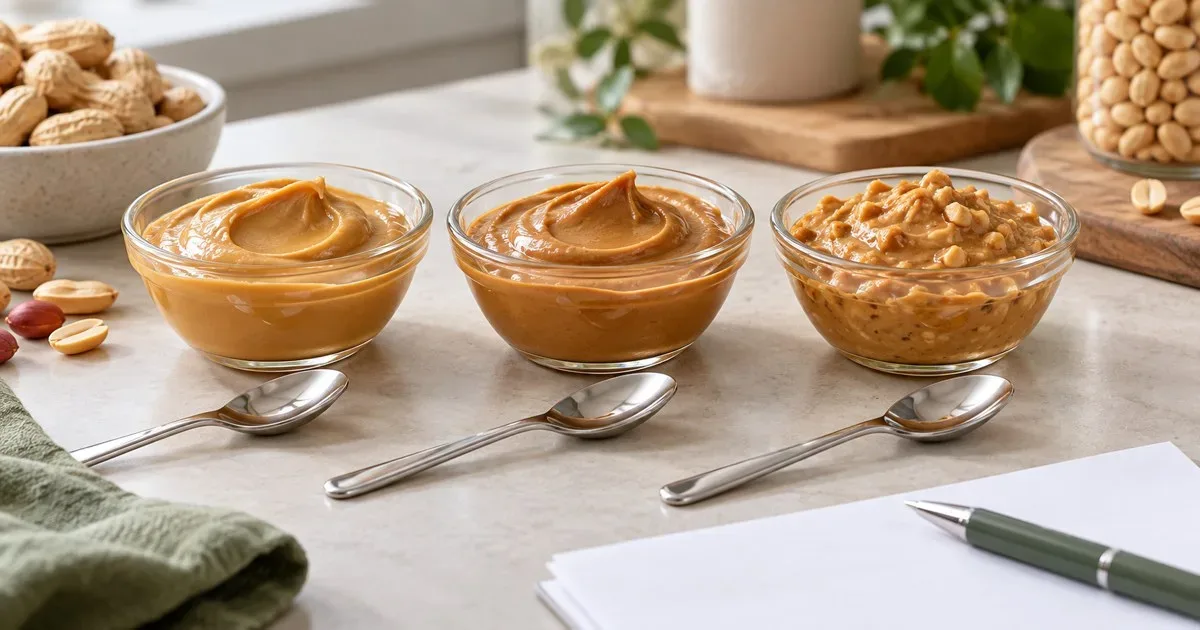
- Product: Smooth, crunchy, natural, unsweetened or another required formulation
- Application: Retail distribution, food service, private label or industrial processing
- Pack size: Preferred net weight and any alternative formats to compare
- Order quantity: Initial requirement and estimated repeat-order volumes
- Destination: Delivery city, country or receiving port
- Branding: Standard packaging or private-label requirements
- Documents: Product specification, testing information and export documents needed
- Timeline: Target order date and expected delivery window
For example, an importer could request a quotation for natural unsweetened peanut butter in 500 g retail jars, specify the destination market and expected shipment volume, and ask for the relevant packaging and product documentation. The supplier can then clarify minimum quantities, labeling arrangements, sampling and logistics before presenting a commercial offer.
United Foods supplies peanut butter for business buyers and offers discussions around bulk and private-label requirements. Explore the product catalogue to identify the appropriate formulation, then contact the sales team with your packaging brief. A clearly defined requirement provides the best starting point for a productive supplier conversation.