A good tea break needs only a few things: a well-made cup, a cookie you enjoy and enough time to notice both. For cafés, thoughtful tea and cookie pairings can also make a small menu easier to understand. Instead of offering every biscuit with every drink, start with a few combinations customers can choose confidently.
This guide offers tasting ideas for milk tea, black tea and lighter brews, followed by a practical way to trial them in your café. Taste is personal, so treat each pairing as a starting point for your own menu rather than a fixed rule.
How to choose tea and cookie pairings
Begin with the tea you actually serve. A strongly brewed masala chai with milk and sugar will taste different from the same tea leaves brewed lightly without milk. Test cookies alongside the finished drink, using your usual recipe and cup size.
Match the strength of the flavours
Try a gently flavoured cookie with a lighter brew first. Then test a cocoa or spice-led cookie with a fuller cup. The useful question is simple: after a bite, can you still enjoy the tea? If one flavour takes over, change the cookie, the portion or the pairing.
Notice sweetness in the whole serving
A sweet cookie beside sweetened chai may suit some customers, while others may prefer a less sweet drink. Offer sugar separately where your service allows it. Describe the cookie by its flavour instead of assuming every customer wants the same level of sweetness.
Compare similar and contrasting flavours
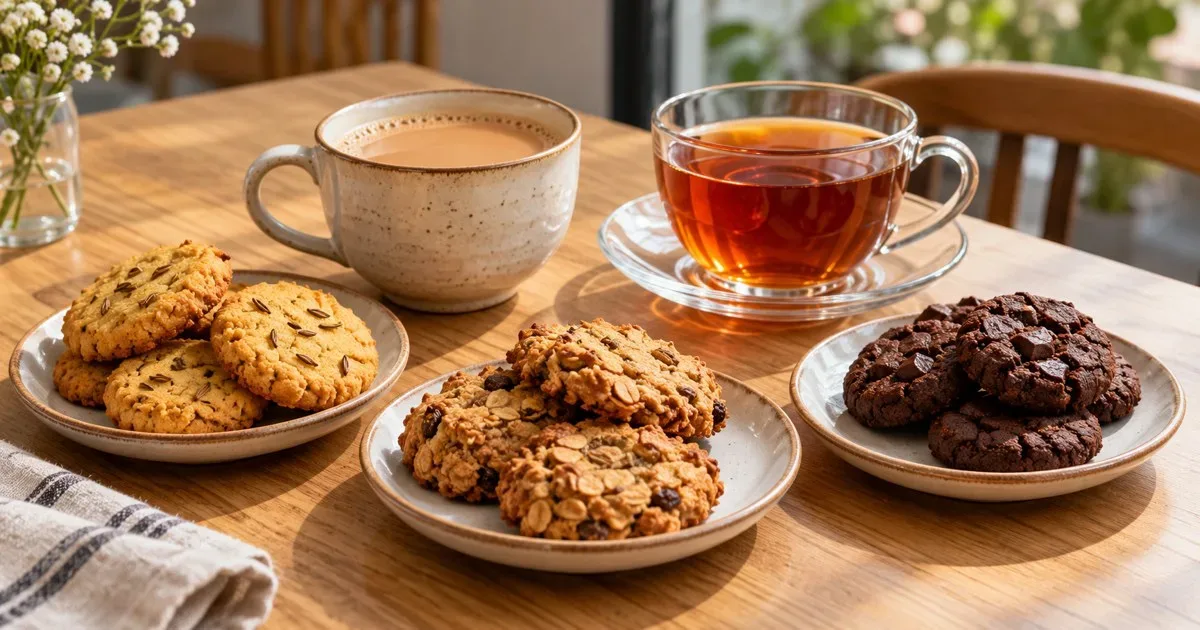
One approach is to bring related flavours together, such as a spiced tea and a cumin cookie. Another is to try a contrast, such as a fragrant black tea alongside a cocoa cookie. Neither approach guarantees a favourite; a short tasting will tell you more than an elaborate description.
Four combinations to try on your café menu
These suggestions use familiar cookie styles. Prepare each tea according to your normal service recipe, then adjust the pairing after tasting it with staff and customers.
| Tea | Cookie to trial | What to notice |
|---|---|---|
| Milk tea or masala chai | Jeera cookie | Whether the cumin aroma works with the tea's spice and sweetness |
| Plain black tea | Chocolate cookie | Whether the cocoa leaves room for the tea's flavour |
| A lighter black tea | Oat cookie | Whether the cookie's texture and sweetness suit a gentler cup |
| Unsweetened milk tea | Oat jaggery cookie | Whether customers enjoy the cookie's sweetness without added sugar in the drink |
Milk tea with jeera cookies
A cumin-led cookie is a useful option for customers who enjoy a savoury note with tea. United Foods lists Jeera Cookies in its current range. Try them with both your regular milk tea and your masala chai; those are two separate tasting experiences.
Keep the menu wording direct, such as “Milk tea with jeera cookies.” Avoid calling the cookies sugar-free or making dietary promises from their savoury flavour.
Black tea with chocolate cookies
Try Chocolate Cookies with a plain black tea first. Taste the tea on its own, take a small bite, then sip again. If the cocoa dominates, test a smaller cookie serving or a different tea already on your menu. You do not need to change your brewing standard solely to make one pairing work.
Lighter tea with oat cookies
An oat cookie gives you another texture to offer alongside tea. Test its actual sweetness and bite rather than assuming that all oat cookies taste alike. A lightly brewed cup can be an interesting trial, provided you keep within the brewing guidance for your chosen tea.
Unsweetened milk tea with oat jaggery cookies
For customers who prefer no added sugar in their drink, try milk tea alongside an oat jaggery cookie. Present this as a flavour choice. Jaggery in a product name does not establish that it is sugar-free, suitable for a particular medical diet or lower in calories than another cookie.
Run a small tasting before changing the menu
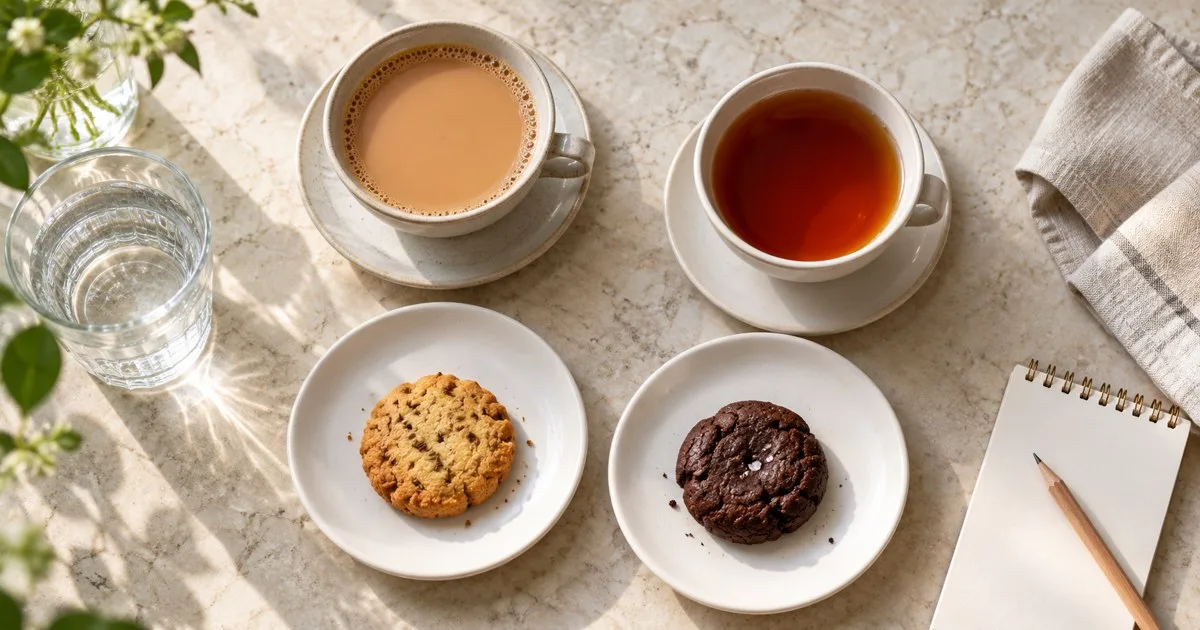
A useful trial can be done with two teas and two cookies. Keeping the first round small makes it easier to identify which combinations deserve a second test.
- Prepare each tea with a consistent recipe, including milk and sugar where used.
- Serve a similar amount of each cookie, with water available between tastings.
- Taste the drink and cookie separately, then together.
- Record flavour balance, texture, ease of eating and personal preference.
- Repeat the preferred combination during a normal service period.
Ask staff to write down what they notice before discussing favourites. “Too sweet with our standard chai” is more useful than a vague score. Include service observations too: crumbs, awkward portions and slow plating can matter even when the flavours work.
A customer trial should also be modest. Offer a limited pairing and ask one clear question: would they order it again? Record actual feedback rather than describing an untested combination as a bestseller.
Make the pairing easy to serve and explain
Choose a serving format your team can repeat during busy periods. A small plate beside the cup lets customers decide how to enjoy the cookie. If you offer dipping suggestions, keep them optional; different cookie textures behave differently in hot tea.
Use clear menu names and state the number of cookies included. Price the combination from your actual tea, cookie, serving-material and handling costs. An attractive pairing does not have to be sold at a discount.
Follow the current pack instructions for storage and handling. Keep unused cookies protected and reseal opened packs as directed. For allergen or ingredient questions, refer to the latest product label and supplier documentation; never infer suitability from a flavour name.
What to confirm before buying cookies for tea service
Once a pairing works, prepare an enquiry around the way you will use the product. Share the cookie variety, expected servings, delivery location and preferred order frequency. Ask United Foods to confirm current pack formats, minimum quantities, pricing, lead time and product information.
For a planning example, 20 pairings per day with two cookies each means 40 cookies per day, or 240 over six service days. This is an illustration, not a demand forecast. Convert that count into packs only after checking the actual cookie count or weight per pack and the portions used in your trial.
Check a sample before making a larger commitment. Confirm that the cookie you receive matches the taste and serving format you tested. If you are planning a broader breakfast offer, the granola guide for cafés can help you think through a separate menu use.
Build your first tea-and-cookie menu pairing
Start with one tea your team already makes well and two cookie candidates. Taste them under normal service conditions, choose clear menu wording and check the supply details before adding the pairing permanently. A small, repeatable offer gives you a useful place to start.
Explore the United Foods product range, then send a cookie enquiry with your preferred varieties, quantities and destination. The team can confirm current options for your café.