A breakfast menu does not need dozens of ingredients to offer variety. Choosing granola for cafés can start with one dependable product used in a yogurt bowl, a fruit parfait and a smoothie-bowl topping. The useful question is how it fits your service: the flavour, the portion, the time needed to assemble a dish and the way the opened pack is handled.
This guide is for café owners, breakfast counters and food-service buyers planning a small menu trial. The combinations below are serving ideas, not fixed recipes or nutrition claims. Test them with the granola you intend to purchase before setting the menu.
Start with the breakfast you want to serve
Decide whether granola will be the main dry ingredient in a breakfast bowl or a smaller topping. That choice affects the serving quantity, the type of bowl and the amount of product you will use each day.
Also consider when the food is assembled. A bowl made after ordering has a different workflow from a takeaway parfait prepared ahead. If crunch is part of the promise, plan how the dry granola will stay separate from the wet ingredients until the appropriate point in service.
- Made to order: add the measured granola when finishing the dish.
- Takeaway: consider a separate dry topping pot where the packaging supports it.
- Breakfast counter: plan suitable containers and serving utensils within your food-handling procedures.
- Menu add-on: define the quantity supplied and how it is charged.
Four practical granola menu ideas
Begin with combinations that use ingredients your café already handles. These suggestions give the same granola different roles without requiring every item to have a new preparation process.
1. Yogurt, fruit and granola bowl
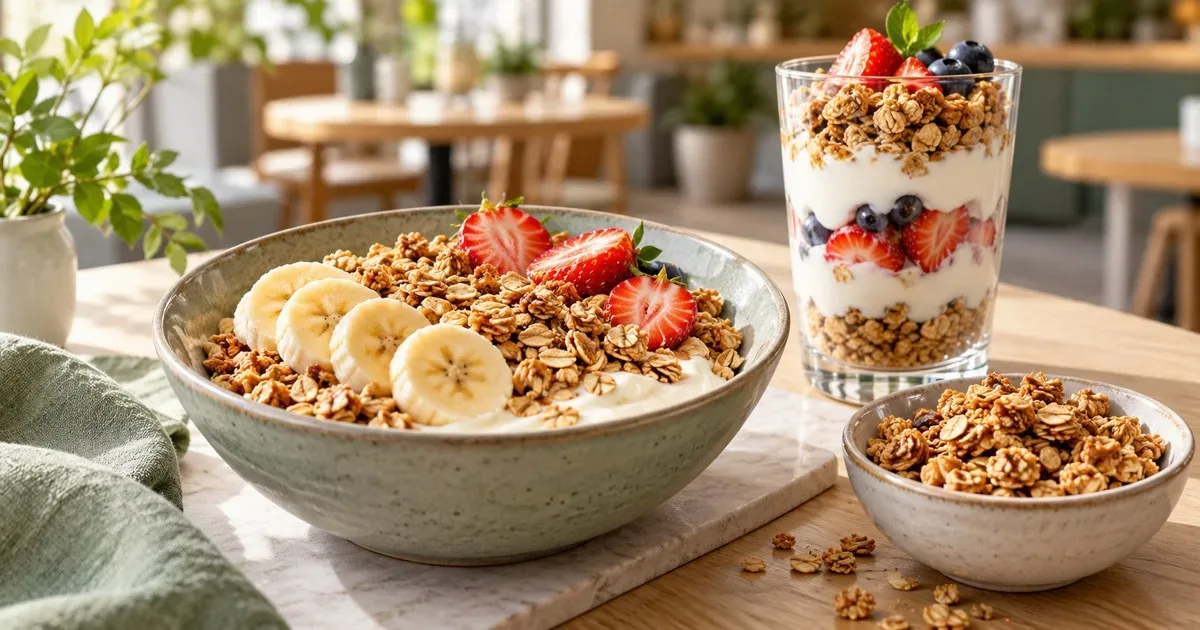
Use plain yogurt as the base, add a chosen fruit combination and finish with a measured granola topping. Banana and apple are straightforward starting points; seasonal fruit gives you another variation without changing the dry ingredient.
During the trial, taste the granola with the actual yogurt rather than separately. Note whether the combined bowl needs any additional sweetness, then record the final recipe instead of leaving each operator to decide.
2. Takeaway breakfast parfait
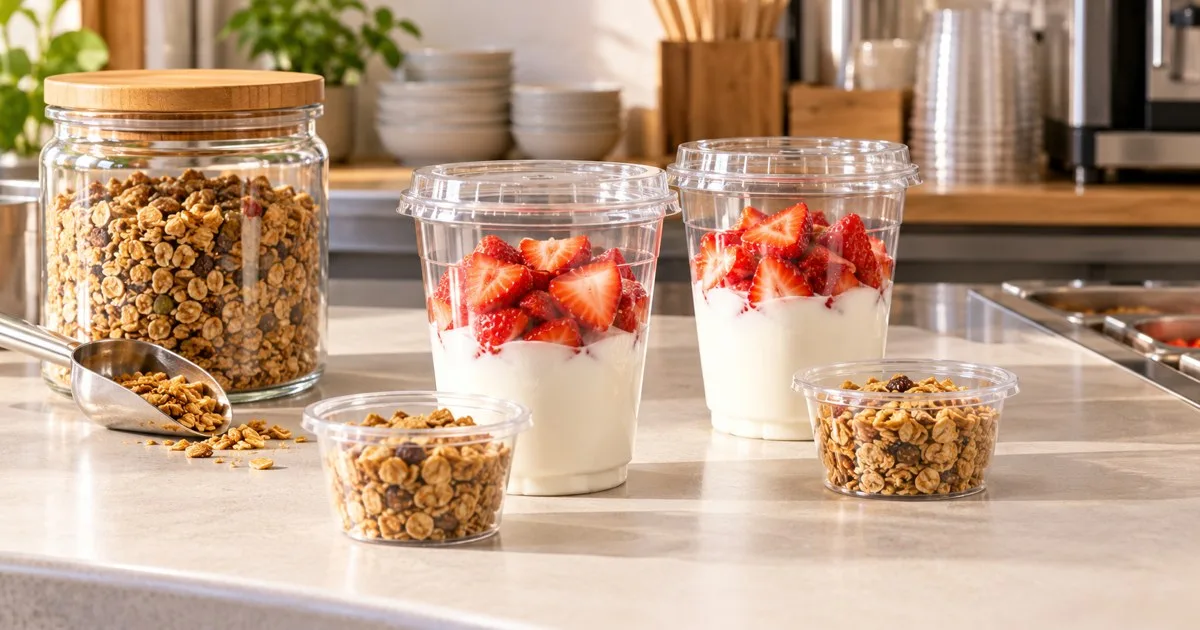
Layer yogurt and fruit in a suitable container, with the granola added for immediate service or packed separately for later assembly. Decide which presentation fits your preparation schedule and intended eating time.
Food-service recipe guidance from Danone and General Mills includes serving granola separately when preparing parfait components ahead. That is a useful texture-planning principle, not a universal storage instruction for every parfait. Follow appropriate handling and refrigeration procedures for the yogurt and fruit.
3. Smoothie-bowl topping
Add granola to a thick, spoonable smoothie base after blending. Record both the amount of the base and the topping so the finished bowl looks and eats consistently across shifts.
A broad layer of fine crumbs and a few large clusters create different eating experiences. Test the product as supplied and consider how it changes as you work through a pack. Avoid promising an exact cluster size until it has been agreed with the supplier.
4. A chocolate granola variation
For a different flavour direction, test chocolate granola with plain yogurt and banana or as a topping on a breakfast bowl. Taste the full combination before adding another sweet component.
United Foods currently lists Original Granola and Belgian Dark Chocolate Granola. Compare the current product information and samples for your menu; a different flavour should have its own ingredient review and trial record.
How to assess granola for cafés before ordering
A useful trial includes the product and the service process. Ask the staff who will prepare the dish to assemble it using the intended containers and utensils, then record what worked and what needs adjustment.
| Check | What to observe | Decision to record |
|---|---|---|
| Flavour | Taste with the actual yogurt, fruit or smoothie base | Approved combination and any added ingredients |
| Texture | Crunch and cluster distribution at the intended serving point | When to add the granola |
| Portioning | Repeatability of the chosen scoop or weighing method | Standard portion in grams |
| Presentation | Fit in the selected bowl or takeaway pack | Serving vessel and assembly steps |
| Operations | Preparation steps, resealing and access during a shift | Simple instructions for staff |
Keep the supplier, product and sample or batch reference with the trial notes. If you change the granola, repeat the relevant checks rather than assuming that the same scoop and recipe will produce the same result.
Set portions and estimate purchasing quantities
Choose the portion for your particular dish and commercial plan. A small topping and a cereal-style breakfast are different uses; one standard quantity does not have to cover both.
A simple planning calculation is:
Estimated daily granola use = portions sold per day × granola grams per portion.
For example, an assumed 40 bowls using 30 g each would require 1,200 g, or 1.2 kg, of granola per day. These are invented planning figures, not a recommended dietary serving or a sales forecast. Track actual use, spills and unsold items during the trial before deciding how much to reorder.
For costing, divide the confirmed granola price per kilogram by 1,000 and multiply by your portion weight in grams. Add the other ingredients, packaging and your own operating costs separately. The granola component alone does not determine the margin of the finished dish.
Protect the dry topping during service
United Foods' Original Granola page advises cool, dry storage and tight resealing after opening. Keep the product's own instructions available to staff and follow any after-opening guidance on the supplied pack.
Use clean, dry serving equipment and keep the main stock protected while a small working quantity is in use. Avoid placing the open granola container beside steam or using a wet spoon to portion it. Retain the product identity and date information when transferring contents into an appropriate food-storage container.
A prepared yogurt bowl needs handling appropriate to all its ingredients. Do not apply the dry granola's shelf-life information to the finished dish, and do not treat a crisp texture as evidence of food safety.
Check the ingredient information before naming the dish
Review the complete current ingredient declaration and allergen information for each granola and every other component. Menu descriptions should match what is actually served.
United Foods' Original Granola listing identifies honey, so do not assume that this product fits a vegan menu. Likewise, avoid describing any granola as gluten-free or suitable for a particular dietary requirement without appropriate product-specific support. A menu idea and a verified dietary claim are separate decisions.
Prepare a café-focused bulk inquiry
United Foods lists bulk and private-label supply for Original Granola, with pricing and minimum quantities confirmed through inquiry. The most useful brief explains how the product will be used and how much you expect to need.
- Preferred granola flavour and any alternatives to sample.
- Planned dish: bowl, parfait, topping or takeaway breakfast.
- Target portion weight and estimated order quantity.
- Preferred pack format, if you have a specific requirement.
- Delivery location and target ordering date.
- Current ingredient, allergen and storage information required for review.
Ask about available pack sizes rather than assuming a particular food-service format. Keep sample approval, quantity planning and commercial confirmation connected in your purchasing notes.
Launch a small menu trial first
Start with two or three combinations and a clear assembly method. Record customer feedback, actual portions and product use, then decide what deserves a permanent place on the menu. That gives the next order a firmer basis than a broad forecast made before service begins.
Explore Original Granola, compare the Belgian Dark Chocolate option, or contact United Foods with your café breakfast brief.
Service-planning references: Danone Away From Home breakfast recipes and General Mills Foodservice parfait guidance. Menu combinations and planning examples above are editorial suggestions, not reproduced recipes.