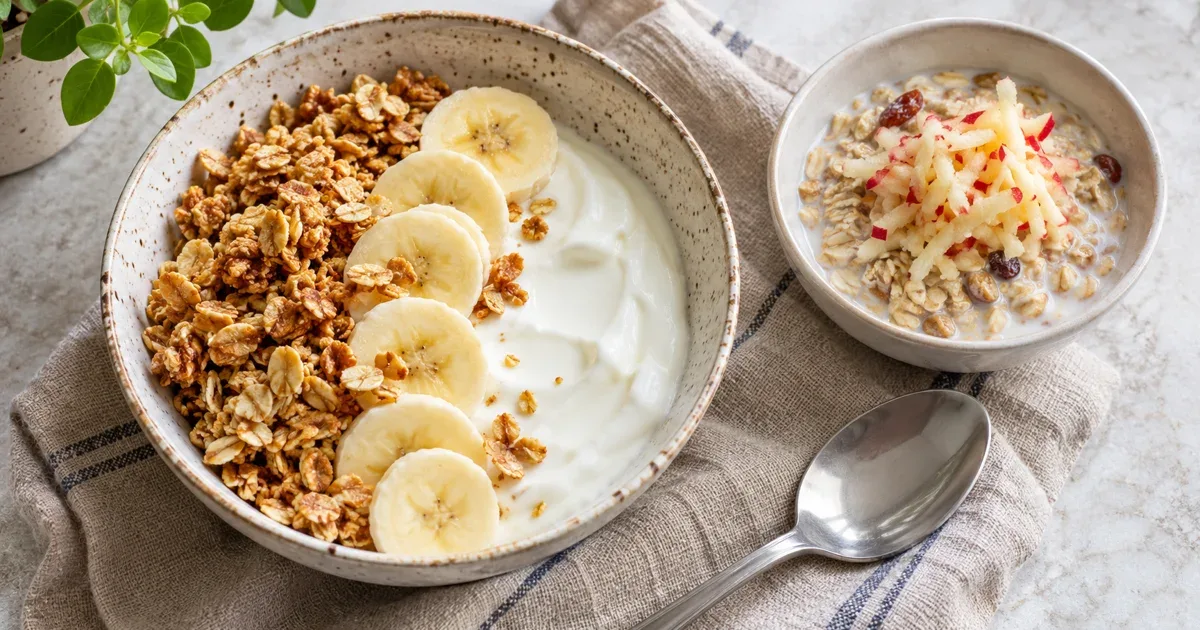
Two bowls can start with oats and still give you very different breakfasts. When comparing granola vs muesli, the main questions are simple: do you want a toasted crunch or a softer mixture, and how much preparation suits your morning?
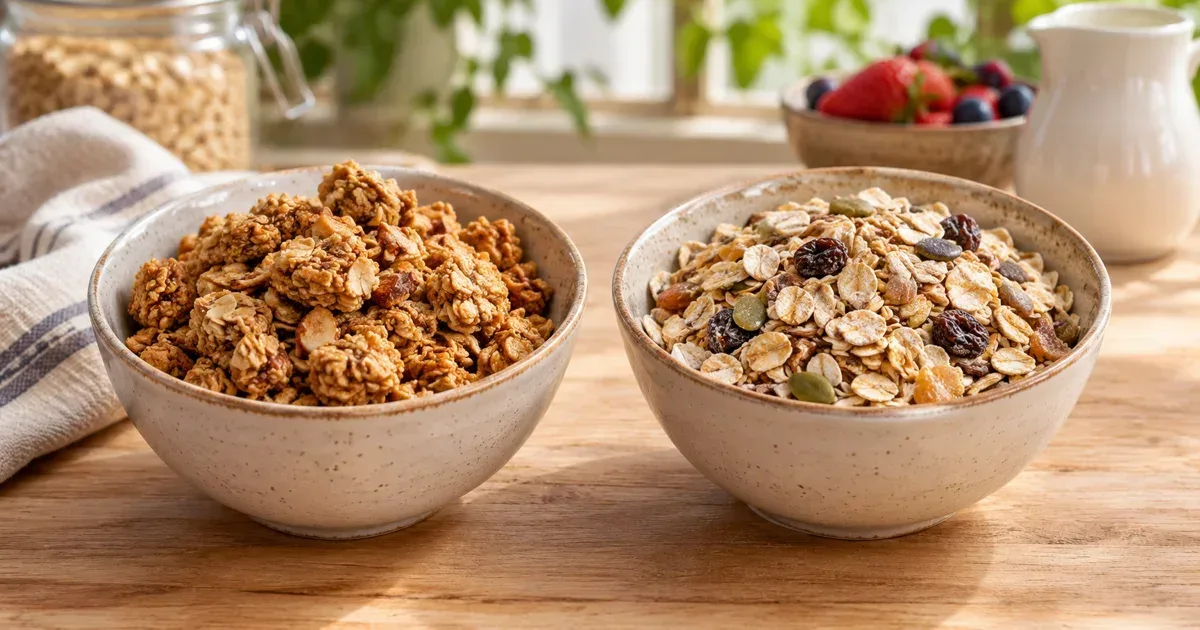
Granola is typically baked with ingredients such as oil and a sweetener, often producing crisp clusters. Traditional muesli is a loose mixture of rolled grains with additions such as dried fruit, nuts or seeds. Modern recipes overlap, so the ingredient list and preparation directions matter more than the name alone.
Granola vs muesli at a glance
Use this comparison as a starting point. Individual recipes may use different grains, sweeteners and preparation methods.
| Feature | Granola | Muesli |
|---|---|---|
| Typical preparation | Baked or toasted, often with oil and a sweetener | Traditionally an unbaked mixture; toasted versions also exist |
| Dry texture | Crisp pieces or clusters | Loose flakes and separate ingredients |
| With milk or yogurt | Starts crunchy and softens as it stands | Can be eaten promptly or softened as directed |
| Common use | Breakfast cereal or a crunchy topping | Breakfast cereal or a soaked breakfast mixture |
| Sweetness | Depends on the recipe and coatings | Depends on dried fruit and any added sweeteners |
| Best buying check | Ingredients, nutrition panel and preferred cluster size | Ingredients, preparation instructions and preferred fruit-to-grain balance |
Choose by texture before choosing a flavour
Texture is often the quickest way to narrow your choice. Imagine the finished bowl rather than judging the dry mixture through the packet.
Choose granola when you want contrast
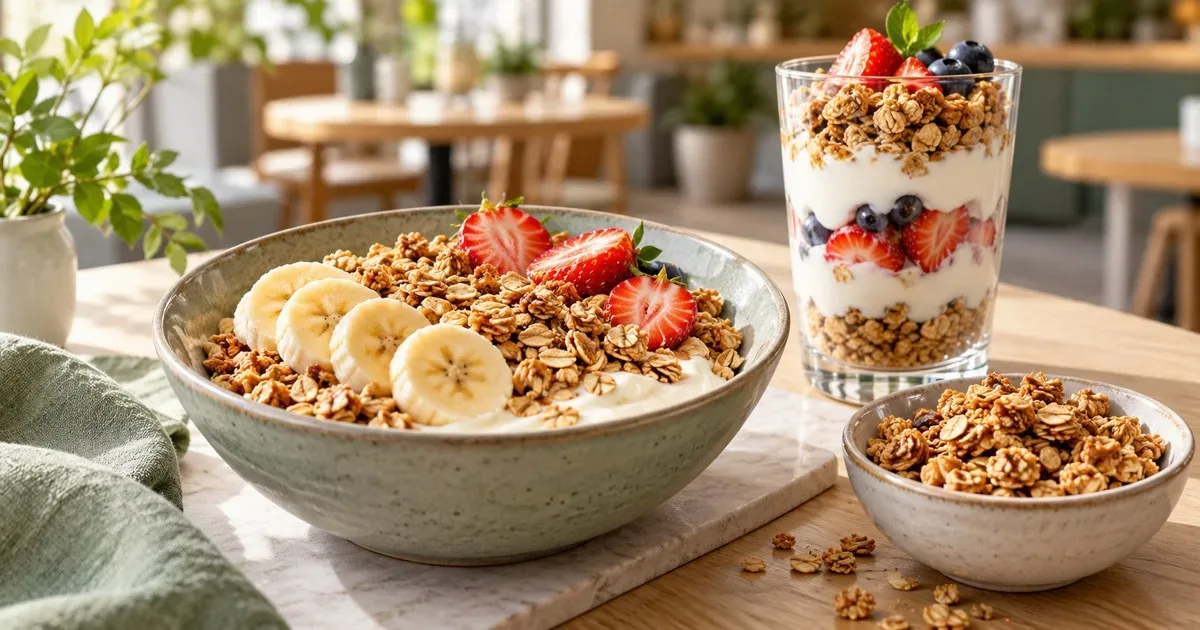
A spoonful of granola can add crunch to smooth curd, yogurt or a fruit bowl. Add it close to serving if that contrast is the reason you chose it. Leaving the mixture in liquid changes the eating experience as the pieces absorb moisture.
Choose muesli when you enjoy a softer bowl
If you prefer softened oats with fruit mixed through, look for a muesli whose directions suit that preparation. Some blends are intended for soaking; others can be served immediately. Follow the packet rather than assuming every cereal mixture needs the same treatment.
Read the label without making assumptions
A rustic packet or a short product name cannot tell you everything about the contents. Put two packs side by side and compare what is actually declared.
- Ingredients: identify the grains, sweeteners, oils, fruit and other additions.
- Comparable quantities: use the same basis, such as the per-100-gram values, when comparing nutrition panels.
- Your bowl: check the amount you actually pour, especially when using cereal as a topping.
- Allergen information: read the declaration and any relevant cross-contact statement for the specific pack.
- Preparation and storage: check whether the product is ready to eat and how it should be handled after opening.
Honey, chocolate and dried fruit all change a recipe. An unsweetened muesli and a chocolate granola may be very different products, while two similarly named granolas may also differ. This guide compares breakfast formats; it does not rank every recipe by nutrition.
Try a simple breakfast comparison at home
You do not need a large purchase to discover your preference. Start with a small pack of each type and use the same bowl, base and tasting conditions.
- Read both packs and prepare them according to their directions.
- For a texture comparison, use the same base, such as plain yogurt, and note the amount of cereal you add.
- Taste without extra syrup or toppings first, so the cereal's own flavour is easier to judge.
- Then add your usual fruit and decide whether you still enjoy the combination.
- Record what worked: crunch, sweetness, ease of preparation and how much you used.
For example, one person may enjoy granola scattered over yogurt immediately before eating. Another may prefer muesli prepared in advance according to its packet. Neither result needs a complicated scoring system; the useful question is which breakfast you would willingly make again.
How to use each in your morning routine
Match the preparation to the time you have available. Keeping the cereal and wet ingredients separate until needed gives you more control over texture.
For a quick bowl
Choose a ready-to-eat blend, follow the serving directions and add your preferred base. If crunch matters, keep granola dry until the last moment. Use a clean, dry spoon in the packet rather than the spoon already sitting in your yogurt.
For a breakfast prepared ahead
Use a muesli intended for your chosen preparation and follow its soaking and storage directions. If adding a granola topping, carry it separately and add it when you eat. Follow the handling instructions for milk, yogurt and cut fruit as well as the cereal.
For cafés and shared breakfasts
Offer a clearly identified topping rather than mixing everything together in advance. Keep ingredient and allergen information available, and use separate serving utensils. Test a small batch under your actual service conditions before setting a standard portion or ordering larger quantities.
Exploring the United Foods granola range
The current United Foods granola range includes Original and Belgian Dark Chocolate varieties. Choose according to the flavour you want in the finished bowl, then confirm the current pack details before ordering.
Original Granola lists oats, honey and olive oil in its ingredient details. Because it contains honey, it is not a vegan option. Read the current pack for complete ingredient and allergen information. The Belgian Dark Chocolate variety offers a different flavour direction to explore.
For a café, retailer or other bulk requirement, share the variety, pack preference, expected quantity and delivery location. Ask for current pricing, minimum order quantity and product specifications rather than assuming a particular format or delivery date is available.
Choose the breakfast you will enjoy preparing
Start with texture, check the actual recipe and try a small pack. Granola often suits a crunchy finish, while muesli can suit a softer, prepared bowl. The label helps you choose the specific product; your own breakfast trial helps you decide whether it fits your routine.
Ready to explore granola? Contact United Foods with your preferred variety, quantity and delivery location for current options.