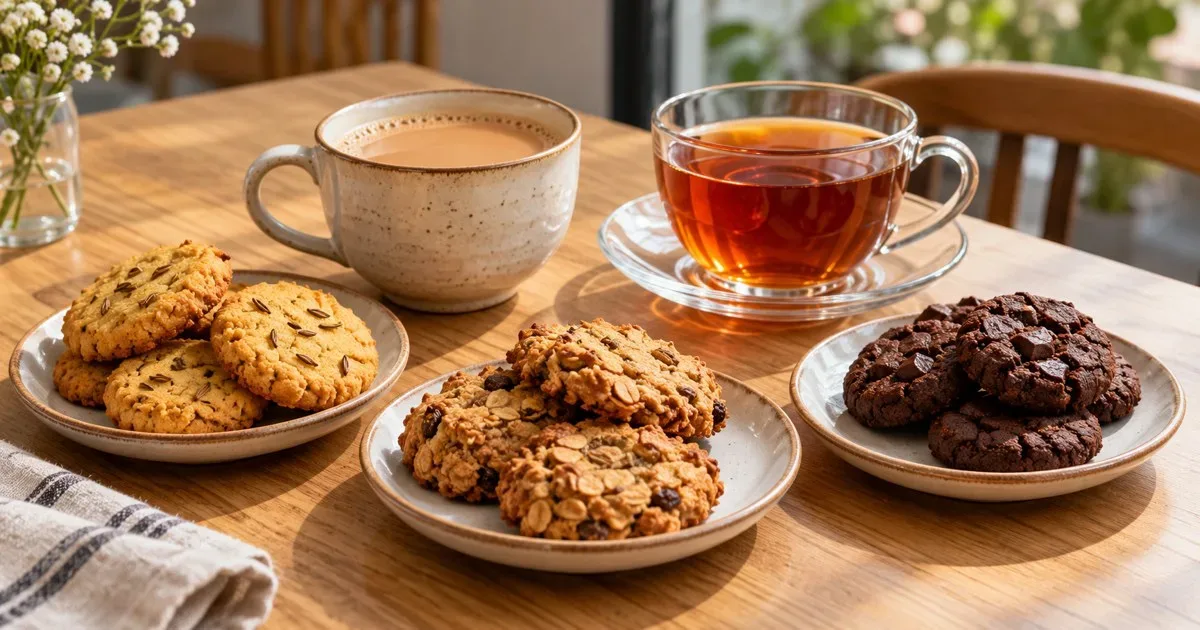
An open cookie pack is easy to forget on a counter until the next tea break. Learning how to store cookies starts with a simpler habit: take out what you need, protect the rest and follow the directions on the pack. A suitable container and a sensible place to keep it make that routine easier at home or during café service.
This guide focuses on packaged cookies, especially varieties intended to have a crisp bite. Recipes, fillings and coatings differ, so the instructions on your actual product take priority over general cookie-storage advice.
How to store cookies after opening
Begin by reading the pack before transferring anything into a jar. Look for the storage directions, date marking and any instructions that apply after opening. Keep that information available even if you change containers.
Reseal the original pack promptly
If the pack has a working closure, remove the serving you need and close it carefully. Check the whole opening rather than assuming a folded edge is sealed. If it cannot close properly, use a clean, dry food-storage container with a well-fitting lid.
The United Foods Jeera Cookies page advises keeping the container cool and dry and tightly resealing the pack after opening. It also mentions an airtight container as an option. Confirm the current directions on the product supplied to you.
Choose a practical container
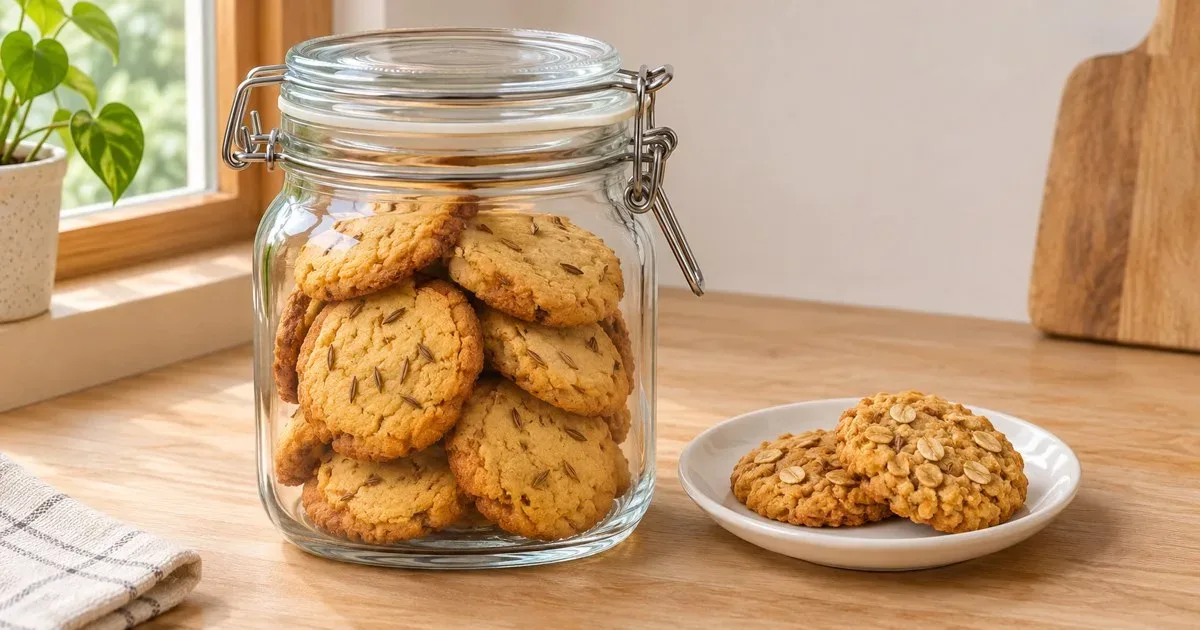
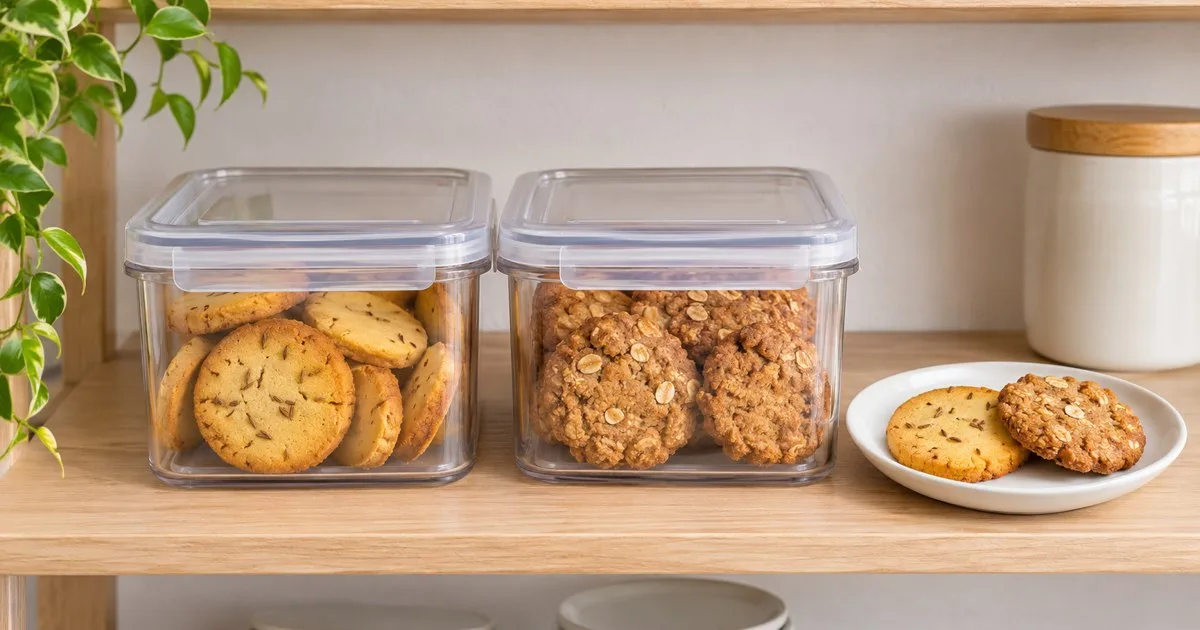
A container should be easy to close fully, easy to clean and large enough to avoid crushing the cookies. A decorative cookie jar with a loose lid may look attractive, but check whether its closure suits the storage directions. Choose the closure to match the directions on the packaged product you are storing.
Make sure a washed container is completely dry before use. Keep the lid with it so resealing becomes part of serving rather than a task left until later.
Choose the storage location deliberately
Follow any temperature or location directions on the label. For products labelled for cool, dry storage, select a cupboard or shelf away from direct sunlight and the heat or steam of cooking. A convenient position beside a kettle may be less suitable than a dry cupboard a short distance away.
Keep varieties separate and information attached
Separate containers help you keep track of each product and its instructions. This is especially useful when you have a savoury cumin cookie alongside a sweeter variety, or products with different textures.
Do not assume that a method intended to keep a soft homemade cookie moist will suit a crisp packaged cookie. Avoid adding bread, fruit or other foods to a pack unless the manufacturer specifically directs it. The simplest approach is to retain the product as supplied and protect it according to its label.
If you decant cookies, retain the original packaging or a clear record of the product name, batch details, date marking and ingredient information. An opening-date note can help a household or café team follow the same routine. It is a tracking aid, not a new shelf-life claim.
A simple cookie-storage routine for cafés
A repeatable service routine is more useful than a large display that stays out all day. Decide who opens packs, where the unused stock goes and how your team identifies what should be used first.
| Stage | Practical action | What to keep track of |
|---|---|---|
| Receiving stock | Check the supplied products, pack condition and date markings | Product and batch information |
| Opening a pack | Record the opening date and follow the pack directions | Any after-opening instructions |
| Preparing service | Take out a manageable quantity and close the remaining stock | Expected servings for that service period |
| Planning the next order | Review actual use by variety | Opened packs and unopened stock already available |
Keep different batches identifiable rather than continually topping up one jar. Plan stock rotation around the applicable dates and instructions. If two members of staff share the same routine, the next shift can understand what has already been opened without guessing.
For a hypothetical example, a café serving 15 cookie pairings with two cookies each needs 30 cookies for that service period. Use your own sales records to plan the quantity. This calculation does not determine how long an opened pack can be stored.
Match pack choices to the way you use cookies
A larger order is easier to manage when the pack format suits your actual rate of use. Before ordering, estimate how quickly you use each variety and ask which current pack formats are available. The largest pack is not automatically the most practical choice for a small café.
At home, open one pack at a time where that suits your household. For business orders, separate the total quantity you want to buy from the size of each pack you want to open during service.
When contacting United Foods, share your preferred cookie varieties, expected usage, delivery location and order frequency. Ask the team to confirm available packs, minimum quantities and the current product information. Browse the product range before making a shortlist.
Common cookie-storage mistakes to avoid
Most improvements are small changes to an everyday routine. Check these points when a pack is opened:
- Leaving the original opening partly exposed instead of closing it fully.
- Using a container that has not dried after washing.
- Storing packs where steam, heat or direct sunlight conflicts with the label directions.
- Mixing batches and losing track of their original information.
- Treating the unopened date marking as a guaranteed storage period after opening.
- Applying advice for a different cookie recipe without checking the actual product.
There is no single after-opening duration that applies to every cookie. If a pack does not make its instructions clear, ask the supplier about that exact product rather than borrowing a number from another brand.
Frequently asked questions
Should I use the original pack or a cookie jar?
Use the original pack if it can be properly resealed in line with its directions. Otherwise, a clean, dry container with a suitable lid may be useful. Retain the original product information.
Can I put different cookie flavours in one container?
Separate containers make it easier to retain each product's identity and follow its directions. They also make it easier to manage different batches and serving preferences.
How long do cookies last after opening?
Follow the after-opening instructions for the actual product. There is no universal duration for every recipe, pack or storage condition. Ask the supplier if the directions are unclear.
Should packaged cookies go in the fridge?
Follow the label. Do not assume refrigeration is required for a product labelled for cool, dry storage. Filled, coated and other cookie types may have different directions.
Can I add bread to keep cookies fresh?
Do not apply a soft-cookie storage trick to every packaged cookie. Follow the manufacturer instructions and avoid introducing another food into the container unless specifically directed.
What should a café ask before ordering in bulk?
Confirm the pack formats, minimum quantities, current storage directions, date information and delivery terms. Share expected usage by variety so the enquiry reflects your service needs.
Make closing the pack part of serving
A good storage routine is easy to repeat: read the label, take out a serving, close the remaining stock and keep its product information. For cafés, add clear batch identification and a simple stock review before reordering.
For menu ideas, explore our tea and cookie pairing guide. To discuss current cookie packs for your home or business order, contact United Foods with the varieties and quantities you need.