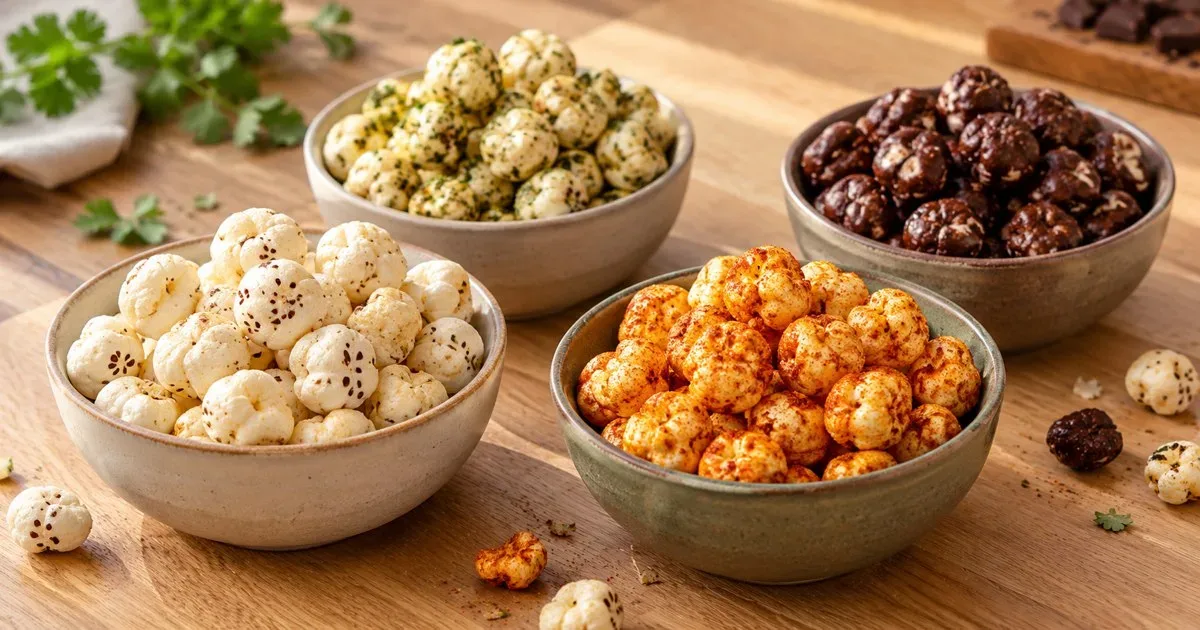
Choosing makhana flavours becomes easier when you start with the tastes you already enjoy. A salted snack, a chilli-led bite and a chocolate-coated treat offer different experiences, even when they share the same base. Rather than choosing the biggest assortment, build a small selection with a clear reason for each flavour.
This guide helps you compare flavour styles, run a simple tasting and decide what belongs in your next order. It also gives retailers and food-service buyers a practical way to shortlist products without guessing which varieties their customers will prefer.
Start with the flavour experience you want
Think about the occasion before choosing a flavour. Are you looking for something gently seasoned to enjoy on its own, a punchier snack for a shared table, or a sweet option? Those preferences are more useful than assuming one variety will suit everyone.
A simple salted starting point
A salt-led variety gives you a useful starting point for tasting. United Foods currently lists Himalayan Salt Makhana. Try it first if you want to assess the base texture without beginning with a stronger seasoning. The name describes a flavour choice; it does not establish a lower sodium content than other snacks.
A stronger savoury direction
If you enjoy bold seasoning, consider a chilli, herb or tomato direction. United Foods lists Peri-Peri, Jalapeno, Pudina and Tangy Tomato varieties in its current range. These names are useful for making a shortlist, but they do not tell you the exact heat level or how one product compares with another. A sample is the best way to judge your own preference.
A sweet option for variety
A chocolate variety can give an assortment a different role from its savoury options. Keep it as a separate tasting category rather than expecting it to behave like a seasoned salted snack. Check the actual product information for coating ingredients and handling instructions before deciding how to serve or sell it.
Compare makhana flavours by taste, not just the name
A short comparison makes it easier to see where each variety fits. The following table suggests what to assess; it is not a ranking or a measured heat scale.
| Flavour direction | Current range examples | What to assess in a tasting |
|---|---|---|
| Salt-led | Himalayan Salt | Salt balance, base flavour and texture |
| Chilli-led | Peri-Peri, Jalapeno | Heat at the first bite and the lingering finish |
| Herb-led | Pudina | Herb aroma and seasoning intensity |
| Tomato or creamy savoury | Tangy Tomato, Cream & Onion | Tang, sweetness and the overall savoury balance |
| Sweet | Chocolate | Coating flavour, sweetness and bite |
For example, someone who likes a lively savoury snack might shortlist Peri-Peri Makhana alongside a salt-led variety. Another person might prefer a herb direction. Neither choice needs to be described as the best flavour for everyone.
Separate flavour preference from dietary suitability. A mild taste does not establish low salt, and a creamy flavour name alone does not tell you the full ingredient or allergen profile. Use the latest label and supplier information for those questions.
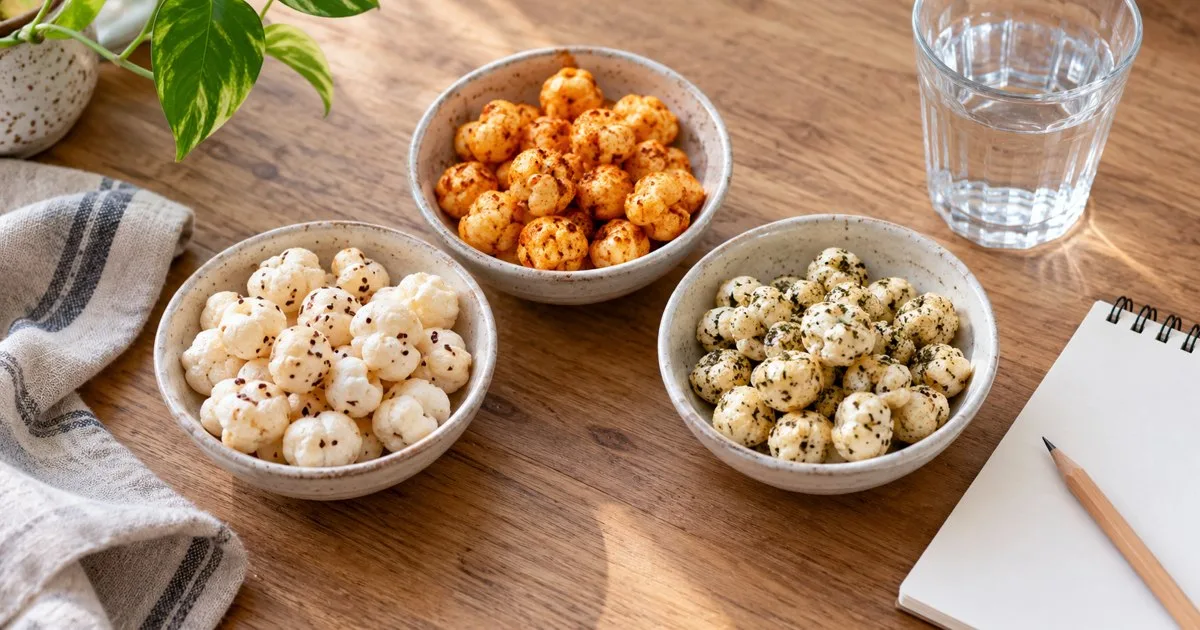
Run a small tasting that gives useful answers
You do not need a large tasting panel to learn which options deserve another look. Begin with three or four candidates and give each one enough attention to judge it separately.
- Keep the varieties in separate clean bowls so seasonings do not mix.
- Check each pack and follow its handling instructions.
- Taste the less intense options first, leaving stronger seasoning and sweet coatings for later.
- Have plain water available between samples.
- Record what you notice before discussing favourites with others.
Use specific notes. “Enjoyed the first few bites but wanted less heat” is more useful than “good.” For retail or café trials, also ask whether people would choose the variety again and whether they would prefer a different serving format.
Keep a simple record with four headings: flavour, first impression, finish and would choose again. Leave room for comments about texture. If one sample seems different from the others, check its pack condition and handling before assuming the difference comes from the recipe.
Build a selection with a purpose for each flavour
A useful assortment does not need every available variety. Start with a few clearly different choices, then add more only when feedback gives you a reason.
For a shared snack table
Offer a salt-led choice and a more strongly seasoned option in separate bowls. If you include a sweet variety, keep that separate too. Tell guests which product is which and retain the packs so ingredient information remains available. This makes the selection easier to navigate without assuming everyone's preferences are the same.
For a retailer's first trial
Choose a limited shortlist that your team can explain clearly. Record sales and repeat requests by individual variety rather than looking only at total makhana sales. A slow-selling flavour may need a different quantity next time; it does not automatically mean you need a larger assortment.
For repeat business orders
Use actual demand from the first order to guide the next one. As a hypothetical example, a buyer may trial three varieties in equal quantities and later find that one accounts for most repeat requests. Rebalance the reorder using those results. There is no universal ratio that every business should copy.
Check the pack details before you order
Once you have a shortlist, confirm the practical details. Ask about current pack sizes, minimum order quantities, sample availability, price, delivery destination and lead time. If you want mixed varieties, ask whether quantities can be combined and how the quotation will show each product.
Use the current ingredient list, allergen information and product documentation for any dietary requirement. United Foods lists standard Peri-Peri and a separate Peri Peri – Jain product; specify the exact variant in an enquiry and request its current details. A similar name is not a substitute for checking the product you intend to buy.
Follow the storage directions on the supplied pack. The United Foods Himalayan Salt product page advises cool, dry storage and tightly resealing after opening. Confirm the directions for every selected variety, especially when coatings or formulations differ.
Frequently asked questions
Which makhana flavour should I try first?
A salt-led variety is a useful first sample if you want to focus on the base flavour and texture. If you already enjoy strong seasoning, include one bolder option to compare alongside it.
Is Peri-Peri always hotter than Jalapeno makhana?
Do not assume a fixed order from the names. Recipes and seasoning levels differ. Taste samples of the actual products to compare their heat and finish.
Can I combine different makhana flavours?
You can offer an assortment, but separate bowls make the flavours easier to compare. Keep ingredient information available for each product.
Does Himalayan salt makhana mean low sodium?
The flavour name alone does not establish that claim. Check the current nutrition information for the product rather than making an assumption from the salt type.
Are standard Peri-Peri and Peri Peri – Jain the same product?
United Foods lists them as separate variants. Specify the exact one you want and check its current ingredient and product information before ordering.
How can I enquire about multiple flavours?
Send your shortlisted varieties, quantity required for each, preferred pack format and delivery location through the United Foods contact page. Ask the team to confirm current availability and terms.
Choose a small mix, then refine it
Start with a few distinct flavours, taste them separately and keep notes on what you would choose again. For business orders, let actual customer feedback and reorder patterns guide the next selection.
Browse the United Foods product range and send your makhana enquiry with the varieties and quantities you want to discuss. The team can confirm current options and help you prepare an order around your requirements.