
The most useful snack display ideas start with a clear question: can a customer find the product, understand the choice and see the price without asking for help? A small store does not need a large fixture to answer that question well.
This guide offers a practical starting layout for packaged makhana, cookies and granola. Treat the arrangement as a trial for your own shop. Customer preferences, available pack sizes and shelf space vary, so measure what happens before committing to a larger range.
Start with the space you actually have
Choose one shelf section or compact counter area that staff can maintain. Measure its width, depth and usable height before ordering a rack or buying stock for it. Check how a customer will reach a pack and where the next customer will stand.
- Keep entrances, walkways and the payment area clear.
- Use a stable fixture appropriate for the packs it will hold.
- Keep products away from direct sunlight, heat and damp conditions, following each pack's storage instructions.
- Leave room to read the product label and lift a pack without knocking others over.
A photograph of the empty space and a few actual sample packs can be more useful than guessing from a supplier's product image. Test the physical fit before deciding how many varieties belong there.
Six snack display ideas to test
Start with the changes that solve a visible problem in your shop. You can try one idea at a time rather than rebuilding the whole snack section.
1. Create clear product groups
Give cookies, makhana and granola distinct areas. Within each group, keep the same flavour and pack size together. This makes the arrangement easier for staff to replenish and gives shoppers a more direct comparison between available options.
2. Show a manageable flavour selection
A narrow shelf can become confusing when every flavour appears in a different position. Start with a small selection based on customer requests and the space available. Add another variety when you have a reason to test it, then review whether it deserves continuing shelf space.
3. Face the packs forward
Arrange packs so shoppers can see the product name and recognise the variety. A facing is simply a visible front position on the shelf. Giving a product two facings means showing two packs side by side; it does not necessarily mean buying twice the stock.
4. Put the price beside the correct item
Use readable shelf labels that match the product, flavour and pack size. Check them whenever stock or pricing changes. If several sizes sit together, make the distinction clear so the customer does not associate one pack with another pack's price.
5. Trial a small complementary display
One optional idea is a cookie section near your tea range, provided storage requirements and available space suit both. Keep each product's price clear. Present this as a convenient grouping, and explain any actual offer accurately rather than implying a discount that does not exist.
6. Reserve one position for a new product
Keep the main layout familiar and use one clearly identified position for a trial variety. Tell staff what is being tested and why. Rotating this position can be easier to interpret than changing the full display every few days.
A sample layout for a small snack shelf
The following is a planning example, not a United Foods display package or a required assortment. Adjust it after checking actual packs and customer interest.
| Section | Possible starting group | What to check |
|---|---|---|
| Makhana | A lightly seasoned option and a contrasting flavour | Pack height, flavour visibility and stock movement |
| Cookies | A sweet variety and a savoury variety | Clear separation and readable pack-size labels |
| Granola | A small breakfast selection if relevant to shoppers | Customer interest and available shelf depth |
| Trial position | One additional variety | Requests, sales, stock availability and repeat purchases |
There is no fixed ideal number of packs for every shelf. Keep the display presentable with the stock you can manage, and avoid filling space with a large order simply because the fixture has extra depth.
Build a short daily display check
A good layout needs regular attention. Give staff a repeatable routine that can be completed during opening or replenishment.
- Check that the correct product sits above each price label.
- Look for damaged packs, broken seals or products that need to be removed from sale.
- Review date markings and rotate stock so earlier applicable dates are dealt with first, following the product's instructions and your shop procedures.
- Keep shelf surfaces clean and the display away from cleaning chemicals.
- Record missing lines before placing the next order.
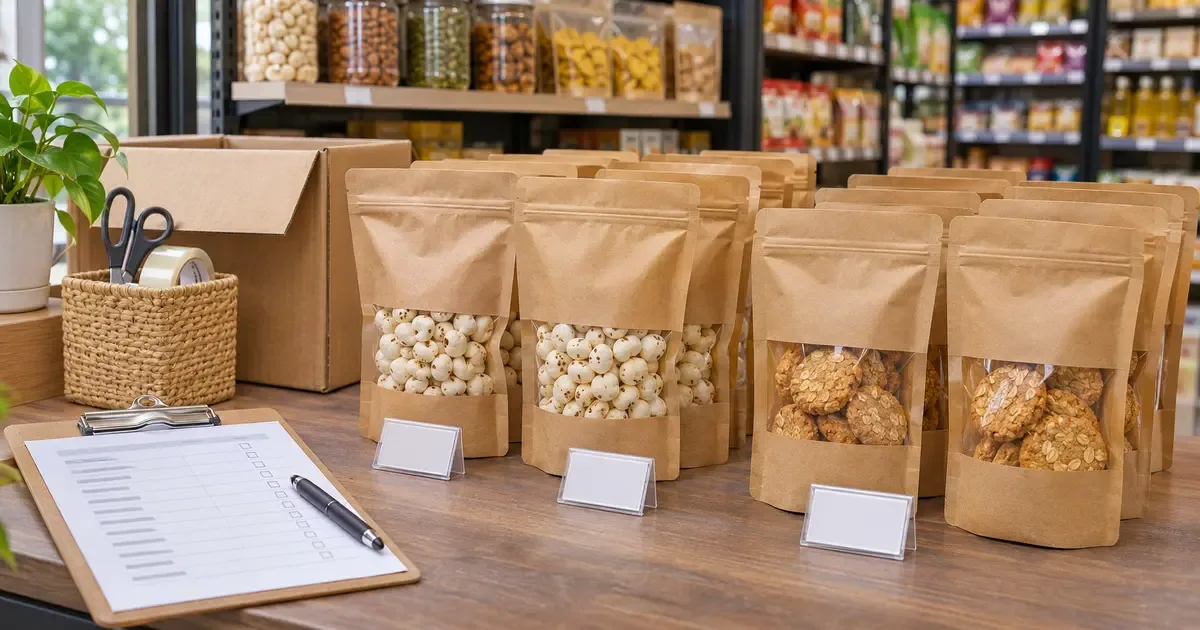
Keep sellable stock in its original sealed packaging with its information visible. The photos here show a display concept; they do not suggest repacking food or replacing the manufacturer's labels.
Test one change and record the result
Choose a manageable review period, such as two comparable trading weeks. Record a baseline, make one display change and compare the same measures. A simple notebook or spreadsheet is enough.
Useful measures include units sold per variety, days out of stock, damaged packs, customer requests and the number of store transactions. Note promotions, holidays and unusual footfall so you do not credit every difference to the shelf layout.
For example, suppose a cookie variety sells 12 packs in one week and 16 the next after its price label becomes easier to read. That is four additional packs, but it does not prove the label caused the increase. If transactions also rose, or the first week included a stockout, the comparison needs that context. These figures are illustrative, not a United Foods sales result.
Prepare a useful supplier enquiry
The current United Foods catalogue includes makhana and cookies, alongside other snack products. Shortlist the varieties that fit your trial and ask for the details needed to plan the shelf.
- Available retail pack sizes and physical pack dimensions.
- Case quantities, minimum order requirements and current prices.
- Current product specifications and ingredient information.
- Date-marking details and the remaining shelf life available at dispatch.
- Delivery options for your location and the expected replenishment process.
Do not assume a branded rack, free display material or a particular commercial arrangement is included. Ask what is available and confirm the terms before placing an order.
Keep the next improvement small enough to measure
A clear shelf, readable prices and a sensible replenishment routine give you a useful starting point. Pick one change, observe it and keep the arrangements that work for your customers. To discuss products for a retail trial, contact United Foods with your shortlist, expected quantity and delivery location.